I have to share. Amy Stevenson posted the first review on Amazon and it is astounding! I couldn’t ask for a better first review. Here is what Amy said about the book:
“Wow wow wow!!!! I’ve only been thumbing through Alexandra Kurland’s newest book that just arrived and I am blown away. After only a day I’ve barely touched the surface of what’s contained within. The depth and breadth of knowledge is astounding. Having personally begun working with Alexandra, I knew it would be good, but it is so much more than I expected.
Science based and accurate from cover to cover and still all the information is presented in a completely user friendly way. It’s so easy to read, understand, make a training plan and take it to your horse in a real world setting!
My first impression of the book is a culmination of Alexandra’s lifetime of working with and training horses and teaching their people. A legacy of her life’s work in education and her collaborations within the world of horses and the world of modern animal training.
This book is a MUST HAVE training manual for every horse owner, clicker trainer from novice to advanced and ANY traditional trainer looking to revise their horsemanship skills to solve any and all types of ground manners issues and teach husbandry and hoof care behaviors and so much more that horses need to understand in order to be safe and successful living in a humans world with us. It’s not possible to list all the important behaviors horses must know that are contained within. I am going to need some extra copies for myself and to gift to my horsey friends when they buy a new horse or their first horse!
If you’ve had a horse who was difficult to catch, halter, lead, lift feet for hoof care, there’s something for you.
If you would like to ride with softness and release from the slightest asking of aids and no escalation because your horse understands how to organize its body to give, this book is for you.
If you’re working with your first ever horse or have been a pony clubber riding since you were a three year old, this book is still for you.
I highly recommend to anyone caring for or working with horses in any capacity. It’s so good.”
A huge thank you to all of you who have purchased “Modern Horse Training”.
So now the fun really begins. Some of you already have the book. The irony is my supply has not yet arrived so those of you who ordered the book directly from my web site will have to wait a little longer than some of the others. How frustrating! It’s like watching everyone else unwrapping their Christmas presents when yours hasn’t even arrived yet to be put under the tree.
I am beginning to hear from people who have the book. The response is a universal: “I love it!”
I definitely love hearing that. So now I’m going to ask you to leave a review on amazon.
This link will take you to the book’s page in amazon.com. If you are ordering outside of the US, you will need to use the amazon site that is appropriate for your region.
Scroll down to the bottom of the page, past the list of other products Amazon wants to tempt you with, past the product details and the “about the author page”, past a whole lot of other stuff, and you will eventually come to Customer Reviews. Please leave a five star review and a comment. Reviews very much help others to find the book, and they are hugely appreciated.
I’ve included a picture of the daffodils at the barn. Spring flowers always get a five star review from me. Now that the book is launched, I have time to enjoy them!
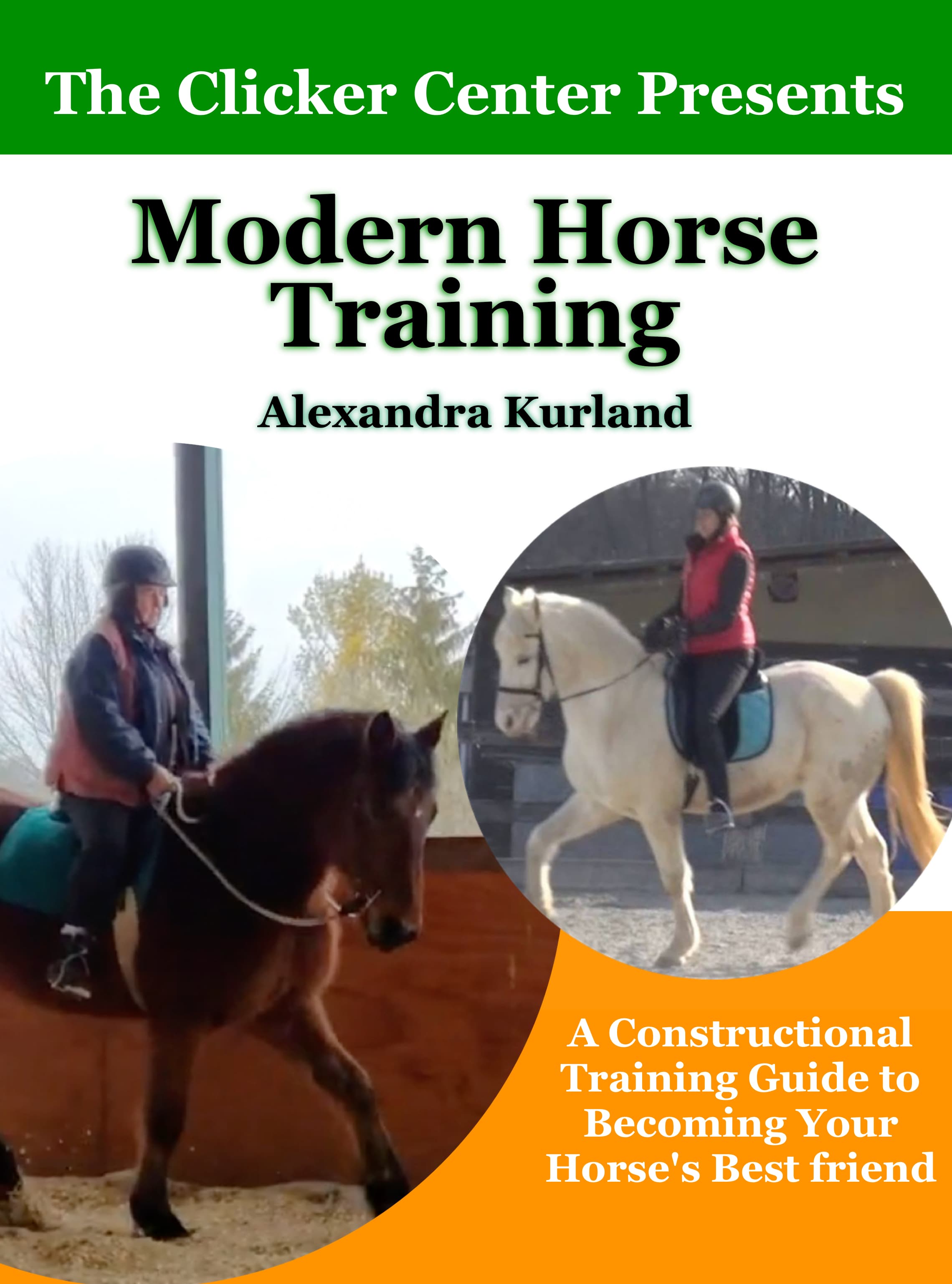
It’s publication day! I’ve kept you waiting all month. Finally, you can order my new book “Modern Horse Training: A Constructional Guide to Becoming Your Horse’s Best Friend”. Order it through my web site: theclickercenter.com, and through Amazon and other booksellers.
Order your copy today! Order copies for your friends!
I know how I will be celebrating Publication Day. I’ll be spending the day with Robin, my equine best friend.
Enjoy the book!
I’ve been looking forward to sharing the book with all of you, and now finally I can.
One more day to go before my new book, “Modern Horse Training, A Constructional Guide to Becoming Your Horse’s Best Friend”, becomes available to order.
Yesterday I shared with you a little behind the scenes information about how books are printed in the modern world. Modern printing for “Modern Horse Training”!
Sharing Clicker Training You are reading this post because you are a follower of my work. You’ve been reading my blog. I suspect you also listen to my Equiosity podcast, so you know that I love horses. That’s something we very much have in common. When I started to explore clicker training, it was something I wanted to share. I’m not alone in that. Clicker training has spread around the planet because lots of people have been talking about it. We’ve been sharing our clicker success stories and other horse people have been paying attention. They’ve gotten curious enough to take a look. That’s a good thing for the horses they love.
This year marks an important anniversary for me. It was thirty years ago in September of 1993 that I first went out to the barn with a clicker in my hand and treats in my pocket.
Peregrine was eight years old. He was living at the home of one my long-time clients where he was turned out twenty-four/seven with her two horses. It was a heavenly set up for him except for one thing. The property was next to a wet lands, and he got Potomac Horse fever. He was one of the first horses in my area to contract the disease. Thankfully he was vaccinated, and also thankfully my vet recognized what it was. Peregrine got the treatment he needed, but not in time to completely avoid all of the long-term side effects. He developed laminitis which led to hoof abscesses in both of his front feet. Instead of being able to go out with his friends he was laid up in the barn. He was in so much pain for the first few days he was unable to walk even a step or two.
It looked as though he might be laid up for a while. I wanted to keep him entertained during his layup, so I decided this was the perfect time to experiment with clicker training, to see what it was about.
In her book, “Lads Before the Wind” Karen Pryor described the process of charging the clicker. She would blow a whistle, throw a fish in the water, blow a whistle, throw a fish in the water until, when she blew a whistle, she saw the dolphins interrupt what they were doing to look for the fish. At that point she knew they were making a connection between the whistle and the fish. So then she could choose the moment she blew the whistle to begin shaping the behavior she wanted to teach.
I went out to the barn to charge my clicker. I clicked and handed Peregrine a treat. He took the treat from me. Hand feeding was nothing new. I clicked and handed him another treat. He took the treat but showed no sign that we was noticing the click. I repeated this several more times.
People think I am patient. They are wrong.
Peregrine wasn’t responding to the click. I thought if this is going to take a long time, I’m not interested. So I looked around the barn for something to use as a target. There was an old dressage whip propped up in a corner gathering dust. I used that. I held it out towards Peregrine. He was curious. He sniffed it. I clicked and handed him a treat.
I held the target up again. He sniffed it again. Click and treat.
He was clearly interested. There was such a different look in his eyes than there had been when I was just handing him treats. He was getting it! Orient to the dressage whip, and you can get your person to reach into her pocket and give you a treat. What a fun discovery!
Over the next few days I expanded the game. I had Peregrine track the target left and right, up and down. As the abscesses healed, he could walk forward a step or two to follow it. Our clicker training sessions became the highlight of his day.
Peregrine was on stall rest for seven weeks. He was a young, fit thoroughbred who was used to a lot of turnout and exercise. I had dealt with other thoroughbreds who were coming off of lay-ups. The challenge was always to keep them from bouncing around and setting back their recovery. Peregrine stayed settled throughout his lay up. Returning to routine work was a non-event. When I started hand walking him, I included a review of basic ground work, only this time I was explaining what I wanted via a click and a treat . When I started riding him again after seven weeks of lay up, he was further along in his training than he had been when he was laid up. That’s not how things normally work!
So I was really curious. I started sharing clicker training with my clients, and the rest, as they say, is history. “Modern Horse Training” is a product of all of that sharing.
Learning More I’ll share one more Peregrine story. I’ve written about his stifles. Peregrine grew up in a body that didn’t work. His stifles would lock to the point where he could not bend his hind legs. They created all kinds of training issues. He was an incredibly sweet horse who became a nightmare to handle. My vet told me that horses often outgrew locking stifles, but if not, there was a surgical option. He could cut one of the tendons that ran over Peregrine’s patella. It was effective, but there was an increased risk that Peregrine might fracture his patella.
When Peregrine was at his worst, when he was blasting out of my hand to unlock his stifles, I was sorely tempted by the surgery. But then I would figure out another piece of the training puzzle, and Peregrine would become a little easier to handle. I would put the surgical option on the back burner for a little longer. It was a risk I just wasn’t ready to take.
I was slowly learning how to manage Peregrine’s stifles – at least when I was working with him. When he was on his own, his stifles would lock up on him again. It was a problem that just wouldn’t go away.
After I started exploring clicker training, I reviewed everything I had ever taught him. The list was a long one. When I had first taught Peregrine to lunge, his stifles would lock up, and he would explode forward to release them. I would be left holding the lunge line, but there would be no horse at the other end. The force with which he blasted forward was enough to shear the metal snap of the lunge line.
I had heard John Lyons say that the strongest lead rope is the one in the horse’s mind. I needed that lead rope so I taught Peregrine to work at liberty. He was a superb liberty horse.
I was also learning classical dressage from Bettina Drummond, Nuno Olivier’s principle student. In addition to riding, I was learning classical work in-hand. That extended beyond the basics of lateral work to piaffe. Before I started him under saddle, I taught Peregrine to piaffe. Mobilizing his hind end helped to keep his stifles from locking, at least when he was working.
I had begun teaching Peregrine Spanish walk shortly before he got sick. I continued to work on that along with everything else. That’s when I started to notice a difference. Peregrine’s stifles weren’t locking up anymore. They had been locking up for eight years, and now they just weren’t.
Karen Pryor called one of her books “Reaching the Animal Mind”. What a perfect title!
That’s what I was doing. Peregrine wasn’t simply doing what he was told. He was internalizing what I was teaching him in a way that he had not done before. He changed how he was using his body. I talk a lot about the Feldenkrais Awareness Through Movement training for people and the profound effects that it can have. I saw something similar happening with Peregrine. The clarity of the marker signal was doing what eight years of training had not. Peregrine stopped locking in his stifles.
This is why I am so passionate about this work. Yes, it is wonderful that we have a kinder way to teach horses to load onto trailers or to stand well for a farrier. But clicker training goes deeper than that. If clicker training were simply about adding some new teaching strategies to our training choices, I suspect I would have long ago moved on to other things. I certainly would not have spent the thousands of hours away from my horses that it has taken to write the books, create the DVDs, produce the podcast, travel to clinics, and respond to all the queries I get about clicker training.
There is much more to this work. I know many of you reading this know what I mean. You have experienced something similar in your own horses. You have seen your relationship deepen in a way that goes beyond words. You have found yourself solving training puzzles, laughing during training sessions, loving your horses.
I have chosen to publish my new book, “Modern Horse Training” on April 26, the anniversary of Peregrine’s birthday, to honor the part he played in introducing me to clicker training. I lost him in September of 2015. He was thirty years old. He is deeply loved and in my heart always.
If he hadn’t been such a master teacher, I might have dabbled in clicker training and then moved on. That’s what others did with it. But he pushed me to see what it was really about. So I have a favor to ask of all of you reading this. For the horses in your life, please send a thank you to Peregrine by buying the new book. It will be hugely appreciated.
Each copy sold makes it easier for the next person to find clicker training. Help me turn the book into a best seller. Together we can make a difference and change the way horses are trained.
The book will be available to order tomorrow, April 26. You can order it from my web site, or through Amazon and other booksellers.
Today I put everything in motion for the book to “go live” on the internet.
The publishing world has changed so much. With the first book I ever published the typesetting was produced on a long scroll. Literally a scroll. I felt as though I had gone back to Roman times. I cut the scroll up and pasted the appropriate text on story boards. I ended up with a stack of stiff cardboard pages which were then sent off to the printer. The press had to be set up for each title that was printed. The set up fees alone ran into the thousands of dollars. My how times have changed!
Now you can do print on demand through Amazon. I have to say it has taken me a long time to wrap my head around print on demand. I feel as though I have jumped from the horse and buggy era straight into self-driving cars. It’s quite a jolt.
So for Modern Horse Training I am using modern world printing. I am using Amazon to produce the print copies.
So here are the options that gives you for ordering the book:
You can order through my web site, theclickercenter.com. If you would like a signed copy, send me an email when you order the book and I will do that for you.
Normally I encourage people to order through my web site. But with this book I very much want Amazon’s algorithms to find it. The way to get the algorithms to notice the book is very simple. You have to sell books through Amazon. The more you sell, the more the algorithms will notice. That’s how books move higher up in the rankings. A higher ranking means when people search for horse training books they will be offered “Modern Horse Training” in the top of the search results. I want people who are new to horses, new to training to find this book. I want them to find kind, horse-friendly training methods.
You can help me get there by buying the book. If you are ordering a print copy from outside of the US, I suggest that you order through Amazon. The book will be printed on your side of the Atlantic (or Pacific if you are in Australia or New Zealand) which means you are not paying the international shipping rates.
If you are in the US, I’ll let you decide if you want to order through my web site or to go through Amazon. The book is also available through other booksellers, but the printing will still be done by Amazon.
You can also order the ebook, either directly from me or through Amazon. The digital version of the book that you get through my web site doesn’t involve Amazon, so if you want to avoid using Amazon (and I know there are people who do), then ordering the ebook through my web site is the way to do it. If you are a regular customer of Amazon, it may be easier for you to get the ebook through their kindle option.
In either case whether you are getting the ebook or a print copy, the publication date is April 26. I set the process in motion this morning. It takes 48 to 72 hours for the book to go live on Amazon so it will be available to order on April 26, the anniversary of Peregrine’s birthday, or on his first day, April 27.
Help me celebrate both his birthday and the publication of the new book by ordering your copy. (Or copies – it’s a great present for friends). With your help we can make this book an Amazon bestseller and spread clicker training around the planet.
I’ve been telling you about my new book, “Modern Horse Training: A Constructional Guide to Becoming Your Horse’s Best Friend”. The publication date is April 26 so not much longer to wait.
In the constructional training approach that the new book is built around you are teaching component skills that you can then use to teach the next, more complex lesson. So in this form of training, what comes before matters. The same can be said of “Modern Horse Training”. It is my fourth book on clicker training horses.
I know going forward I’m going to receive emails from people who are new to clicker training and who feel overwhelmed by all the resources I have created. It’s easy to get stuck at the starting gate. They will be asking me where do they begin? What book should they buy?
With clicker training it is always good to begin at the beginning and work your way systematically through the core foundation lessons. They provide the launching point for your training.
But that doesn’t answer the question – what book should you buy? Part of the answer to that question depends upon why you came to my web site? Did you come because you want to learn about clicker training? Did you come because you are having a problem with your horse that you want to solve?
My answer to both of these needs begins by describing how I see each of the books. First of all, it’s important to know that I am a bit of a pack rat. The dictionary says a pack rat is someone who saves unnecessary things or is a hoarder. That’s not what I mean. I like to think that everything I save serves a function, and I’m not really a hoarder. I’m just not good at throwing things out. I began writing about clicker training in 1996. I can’t begin to guess the number of emails I’ve written, or the number posts I’ve sent out over that time span. But a fair number of the words I have written have landed in my blog and on web site. Once they get lodged there, I’m not good at clearing them out. Think of my blog like an attic. There’s a lot to explore, but you will need some time to go through all the “boxes”. They are worth rummaging through because you never know what treasures you are going to find. That includes the Panda reports and the JOYFULL Horses book which I produced in a serial format on the blog.
And then there are the books themselves. The first book, “Clicker Training for your Horse”, was published in 1998. This year marks its 25th anniversary. Back in 1998 I know there were people who thought clicker training was just a fad that would go away. Clearly they were wrong.
“Clicker Training for your Horse” was the first book in the horse community on clicker training. In 1998 there was a strong cultural bias against the use of food in training horses. The common wisdom was that treats spoil horses. You were told, if you use treats, you’ll teach your horse to bite. You’ll ruin your horse. One prominent clinician declared that giving treats was one of the worst things you could do in training.
Oh dear!
I had quite the up hill climb ahead of me to get clicker training introduced to the horse world. But we all know how you get to the top of a steep hill. You go one step at a time. So I started climbing and pretty soon I was joined by others. My fellow pioneers made the journey a lot more fun, a lot more interesting, and certainly a whole lot easier. Working with other people meant there were more stories. It was no longer just my experiences that I could talk about. We were seeing so many more ways in which you could use clicker training, both to teach new skills and to solve behavior problems
I had raised my own horses so when I started to write a clicker training book I wanted it to be a complete soup to nuts training program. I wanted to present the full arc of a horse’s life beginning with working with foals, through to starting a young horse under saddle, to performance training, and on into the senior years. I wanted to show that clicker training was relevant to all horses, all ages, all breeds, all sizes, and all performance goals.
As I write this I am realizing that when I wrote “Clicker Training for your Horse”, I was much closer to the early years with my own horses. Robin came to me in 1996 the same year that I started the book. Clicker training was new and my horses were still very young. I have traveled through the long arc of our lives together, and I am writing this fourth book from the perspective of looking back over the maturing of both my horses and of clicker training.
So “Clicker Training for your Horse” represents the beginning. I love stories. We learn a lot through the telling of stories. They help to anchor ideas and to clarify concepts, so to ease people into clicker training I shared a lot of stories. Instead of writing in general terms about working with aggressive horses, I included a case history written in diary form of a client’s horse. Instead of writing in general terms how to teach trailer loading, I wrote about a haflinger who didn’t just refuse to load. He would tank over the top of his owner to get away from anything he didn’t want to do. That included lunging as well as loading.
One of my clinic organizers told me that the first time she read my book, she cried when she got to the end. Her husband wanted to know what she was reading and was surprised to discover it was a book on horse training! When she got to the last chapter, she didn’t want it to end. I can think of no better compliment than that. And of course, it didn’t end. I keep adding more to that original book in the form of new books, DVD lessons, clinics, and an endless stream of on-line resources.
Clicker training began to take off from the launch pad of my first book. I remember the first time I did the Equine Affaire, people were mystified by the basket full of clickers that were on display. What were these things? What were they for? Children clicked them incessantly. What amazed me were all the parents who bought their children a noise maker! Eight year olds would walk off clicking the clicker at their siblings. I remember thinking the parents were going to have a miserable drive home, but they did it to themselves!
That was the first year. By the second year people were stopping by to share their clicker success stories. That was a delight, but I was also getting questions from people weren’t sure how to use clicker training. They had taught their horses to touch a target, but then they got stuck. The stories in the first book had encouraged them to dip their toe in the water, but they still didn’t know how to swim.
So I wrote the second book, “The Click That Teaches: A Step By Step Guide in Pictures”. The original version came out in 2003 so this year marks its 20th anniversary. This book strips out the stories. Instead it presents an easy to follow lesson plan. Each lesson represents a step in the training. There are a hundred lessons. Each one is described within a page that includes a description of the lesson plus pictures that highlight key elements of that lesson. It’s an easy book to use. Every chapter is color coded so you can move easily from one section to another. It begins with the foundation steps and moves through ground work and then on into an overview of riding with the clicker.
That book has served the clicker-training community well. It has helped spread clicker training around the planet. But even with two books published, there was still a missing piece and that was riding. Yes, both books included sections on riding, but they didn’t go into the depth that I wanted to cover. When I wrote “Clicker Training for Your Horse” the original manuscript was over 500 pages. Half of it was on riding.
A five hundred page book would have been too much so the riding was reserved for a second book. Because I wrote the Step By Step book in-between, there was a delay getting the Riding book out. I knew that other people were not thinking about clicker training all day, every day the way I was, so I began the new book: “The Click That Teaches: Riding with the Clicker” with a refresher course. I started with a review of the basics before I launched into detailed instructions for riding with the clicker.
The book begins with safety and then takes you to performance training. The core of it is balance – no surprise there. And the beauty of this work is the same lessons that keep you safe, perfected take you to performance excellence.
The riding book is not where you begin. It is built around an understanding of lateral work and the teaching of good balance that is introduced in the first two books. So you begin with one or both of those books and then move on to the riding book.
In addition to the books, during this time I was also producing videos, first as VHS tapes and then as DVDs. People needed to see what the work looked like. Much of the video that I used in these lessons was taken at clinics, so you are watching horses and handlers going through a lesson in real time. This is what a particular lesson looks like. These are some of the puzzles and stumbling blocks you may encounter. These are the details that make a difference. You are learning right along with the people you are watching. The DVDs do not take the place of the books. They were designed to compliment them. I think you need both. The DVDs can show you details that I couldn’t possibly describe in a book, but the books put those details into an overall context. They provide the road map. The DVDs give you more information about the individual “scenic attractions” you’ll be visiting along your training route.
I wanted these lessons to give good value for money so I packed as much into them as I could. When I was first producing them, a VHS tape could hold two hours so that’s what determined the length of the lessons. No three minute YouTube videos for me! I wanted to give you real substance. That’s both a plus and a minus. A two hour training video gives you a lot of good information, but it’s a lot to get through in any one sitting. Sometimes all we have time for is a three minute clip, not a feature length movie.
All the while I was working on the books and DVDs, I was teaching clinics. We were all learning a lot. Every horse/handler team added to our understanding of clicker training. Horses revealed more details that made a difference to them. I developed more teaching strategies for dealing with the different situations I was encountering. After all, one of the core principles is there is always more than one way to teach every lesson. If one strategy isn’t working, change what you are doing.
Horses made us look for those other strategies. I got better at explaining what we were doing and why. There was so much more new material to share, so I built the on-line course. It combined text with video. The video clips were shorter than the DVD lessons. You read about a lesson, watched the video, read some more about the lesson, watched the next video. The course is self-paced so you go through it on your own schedule. It complimented well the books, DVDs and clinic resources.
In 2020 when the world shut down, I switched from teaching in person clinics to teaching on-line. Out of that experiment I developed a series of eight on-line clinics. I have discovered that these clinics are an effective way to teach. They offer a great way to get together, and for people to get direct feedback on their training without the stress and expense (and carbon expenditure) of travel.
So how does the new book, “Modern Horse Training”, fit into this? Much of what I was teaching thirty years ago, I am still teaching today, but I have gotten better at explaining the what and why of the training. So I have once again packed a lot in. You could think of this new book as the Step By Step book on steroids.
So which book should you start with. Certainly “Modern Horse Training” will get you off to a great start with the most up to date teaching material. But I hope you’re like I am. When I find an author whose work I enjoy, I want to read every book they have written. That holds true for training books as well as for fiction.
When you read “Clicker Training for your Horse” you get to go back in time. How was I talking about clicker training in those early days? Reading the earlier books may give you a different way of thinking about a lesson. What have I added to the explanation? What story did I tell share before that got squeezed out this time? The books look at the work in different ways and at different times in the development of clicker training. When you hear something explained in slightly different ways, you may see connections you didn’t make before. But if you are limited in terms of time and budget, certainly beginning with the new book will get you off to a great start. And if you are already an experienced clicker trainer, I think you will enjoy seeing all the updates and additions to the teaching.
What has changed probably the most in “Modern Horse Training” is the way in which I construct the layers of the training, but to find out what I mean by that, you will have to read the book. And you will be able to do that after the publication date on April 26, 2023. Less than a week to go now! Very exciting.
“Modern Horse Training” will be joining my other books on April 26. You can order them through my web site: theclickercenter.com. Visit my web site to learn more about the books, DVDs, on-line course and on-line clinics mentioned in this blog.
You will also be able to order the book through Amazon and other book sellers
When I talk about Modern Horse Training, I’m referring to a shift away from command-based training to cue communication.
What does that mean?
Commands represent where we were in the horse and buggy era of horse training. Horses were a tool we used to plow fields, to provide transportation, and sadly to wage wars. Orders were given and orders were obeyed – or else.
Commands do not invite a conversation. They are a one way street. Within this frame of reference, a failure to respond is considered the fault of the horse. Riders are told a horse is being lazy, or stubborn. He’s testing you. You need to show him who is the boss.
Cues take us to a different way of thinking. Cues invite a conversation. I signal to my horse. His response in turn cues me. It’s a back and forth flow where I allow my behavior to be influenced by my horse. The behaviors we teach become the “vocabulary” our animals use to communicate with us.
It wasn’t a horse, but one of my cats who pointed this out to me. When she and her sister joined the family, I had just begun to explore clicker training. One of my clients found them starving in a barn, and I took them in.
Once she had been with me for a few weeks, this particular kitten decided she wanted to share in my breakfast. She would hop up next to me and nose her way towards my plate. I didn’t want to encourage that kind of sharing, but I also didn’t want to push her away. Instead I experimented with a technique I had seen dog trainers use to teach dogs to sit. They would use a food lure held above the dog’s head to encourage the head to go up and the rear end to go down.
I tried it. I put a dab of margarine on the tip of my finger and held it up above my kitten’s nose. As she looked up, her rear end went down. Click, I let her lick the margarine off my finger. Two clicks later and she was satisfied. She left me in peace to finish my breakfast.
The next morning she was back. I repeated the process. Her rear end was now sinking all the way down so she was in a sitting position. Click and treat. A couple of clicks later and she was again satisfied.
We continued with this breakfast ritual. Now she would jump up next to me and sit. Click, I would give her a dab of margarine. One morning she lifted a front paw up slightly up off the seat cushion. I liked the possibilities that this opened up so I clicked and gave her a treat. Soon she was not only sitting, she was rocking back on her haunches and sitting upright with both front paws up above her head. I was charmed. She wasn’t being a pest at breakfast time. Instead, I was getting this very fun behavior.
But cats being cats, that wasn’t the end. They are such good trainers!
A few days later I was in the kitchen. When my kitten came into the room, I was over by the sink. She stopped near the refrigerator. When I glanced in her direction, she sat down, rocked back on her haunches and lifted both paws up in the air. I had to laugh. She was cueing me!
Dog trainers use hand cues to signal to their dogs. She was using paw cues.
I could be a well-trained human.
I walked over to the refrigerator, opened the door, reached in and took out the tub of margarine. I opened the lid, put a little dab of margarine on my fingertip and offered it to my kitten. That was quite the complex behavior chain she had just cued!
I recognized that she had turned the tables on me. She was using a behavior I had taught her, but she was using it in a new context to get what she wanted from me. Clever cat!
This is what Modern Training shows us. If we are open to it, the behaviors we teach our animals can be used by them to communicate back to us.
They can say: “Yes, please, come and interact with me. I want more of this particular activity.” Or they can say: “No, I don’t want that right now.” They can add nuance: “Wait! I’m not ready! I’m confused.” We can read all this and more when we recognize that they are using behaviors we have taught them to communicate with us.
Modern Horse Training recognizes that saying “no” is an acceptable response. Horses have always had ways to say “No.” When handler’s aren’t tuned in, horses “raise their voices” by threatening to bite, pawing, looking away, acting bored, etc. They “shout” by rearing, spooking, bolting, bucking, kicking, and not just threatening to bite, but actually doing so.
In Modern Horse Training handlers learn to listen to whispers so their learning partners don’t have to “shout”. They adjust their behavior and willingly let themselves be cued by their horses.
For many people who have been brought up in the command-based paradigm, saying “No” isn’t an option for a horse. If a horse refuses a fence or baulks at the bottom of the trailer ramp, the whips come out. For those trained in this type of handling this is standard practice. Enforcing your commands isn’t abuse. It’s considered good training.
We’re taking a different training path. In the cultural norm that I started out in there was no safe way for a horse to say “No”. Now in the clicker training world, we’re giving our horses a rich vocabulary that expands the conversations. We’re creating a safety net for both the horse and the handler. Fear and confusion are replaced with confidence and enthusiasm – on both sides.
By expanding the repertoire of behaviors that are available to them, handlers can become much more nuanced in their reading of a horse’s emotional state. Body language expands to include all the behaviors that training has generated. The horse can use this richer “vocabulary” to engage in conversations with us.
At this point I expect every one of you are now saying: “I recognize what you’re talking about! My animals do that. My horses, my iguana, my parrots, my guinea pigs, my cat, my dog, my sea lion all use the behaviors that I’ve taught them to let me know what they want. Here, let me give you these ten anecdotes that show how my animals are using the behaviors I’ve taught them to communicate with me.”
All our animals use the behaviors we’ve taught them to communicate with us. We just need to learn to listen to them as much as they listen to us.
Modern Horse Training reminds us to look for the ways in which our animal learners are using the behaviors we have taught them. Often they will be using them in unique situations, or in ways that we had not originally intended the behavior to be used.
One of the most important aspects not just of Modern Horse Training, but Modern Animal Training in general, is this: good training expands the conversation. It makes us partners in creating choice and control for both of us. That truly is a great basis for a life-long friendship.
My new book, Modern Horse Training: A Constructional Guide to Becoming Your Horse’s Best Friend” will be published on April 26, 2023. Just a week to wait!
It will be available through my web site, theclickercenter.com, and through amazon and other book sellers.
Titles are important. Names matter. I learned this a long time ago when I started referring to the “t’ai chi wall”. That’s an element in the rope handling that I teach. Suddenly, it became a something. It stood out from everything else that was associated with the rope handling.
Names matter. Farmers know this which is why they don’t name their animals. Names transform them into individuals.
We name our horses because we are looking for that individual connection. That brings me to the rest of the title I have given my new book. I’m calling it, “Modern Horse Training: A Constructional Guide to Becoming Your Horse’s Best Friend”.
In previous posts I’ve talked about what Modern Horse Training means to me. I’ve described the example/non-example comparison that I am making by choosing that title. In yesterday’s post, I wrote in general terms what constructional training refers to.
Of course, I tried on many different titles, but I kept coming back to “Modern Horse Training”. And then there was the subtitle. I considered staying with just “A Constructional Guide to Horse Training“, but I kept adding on the rest: “A Constructional Guide to Becoming Your Horse’s Best Friend”.
I know there will be people who read that title and think the book isn’t for them. They are interested in performance not friendship. That title is too mushy.
I’m also interested in performance. The cover reminds us that we don’t have to give up on one to have the other. Training teaches performance skills. It also creates connection.
I should say good training does this. Force-based training turns communication into a one way street. When you use commands, meaning you are controlling your horse with a do-it-or-else threat backing up every request, you become like a drill sergeant barking out orders. The sergeant tells the private what to do. The private does what he’s told. He’s not on equal footing. He doesn’t respond by giving an order back to the sergeant. If he does, he’s being insubordinate, and he will be punished.
Punishment shuts down behavior. When we use command-based training we shut down the back and forth communication that makes being with our horses such a joy. We shut down the full expression of their personality. That funny, brave, inquisitive, smart, mischievous, bold, kind individual we love so much disappears and hides away from us. Good training brings our horse’s personality out of hiding – in a good way.
In a recent Equiosity podcast I brought together a group of people who are currently going through my on-line clinics. They were all regular attendees in the coaching sessions that are part of those clinics. The conversation turned into a three part series. I ended by asking each of them to describe what they thought of when they were pictured a clicker-trained horse. I thought they might describe some particularly fun bit of training they had taught to their horses. But no, to a person, they all talked about the relationship that was developing through clicker training. What they most valued was not that they could now pick up their horse’s feet with ease, or load him on a trailer, or ride him. What they valued most was the connection the training was creating.
That’s why we have horses. Think back to the horse books you read as a child. If you are one of the horse addicted, you probably had a whole shelf full of them. Yes, the stories were full of riders who soared over giant fences or raced across deserts. But always, what mattered most was the love between horse and handler.
Too often performance is put first and that connection is lost. We talk about “bomb-proof horses”. But what really does that mean? Yes, safety always comes first. I want a horse who is comfortable with me and the world around him. But if there is a bear nearby, I would like my horse to be able to tell me that going forward is really not a good idea. I want my training to give him a voice that counts, a voice that is listened to.
If he’s hurting, I want him to be able to let me know that he can’t do what I’m asking. I want him to be able to tell me this without having to shout. Horses shout by rearing up, kicking out, bolting off. Long before he has reached the boiling point, I want my training to give him a voice that is heard.
This is how we keep horses sound. It is how we remember why we fell in love with them in the first place. It is how we transform ourselves from drill sergeant into best friend. The title is the right one to chose. The new book is indeed a constructional guide to becoming our horse’s best friend.
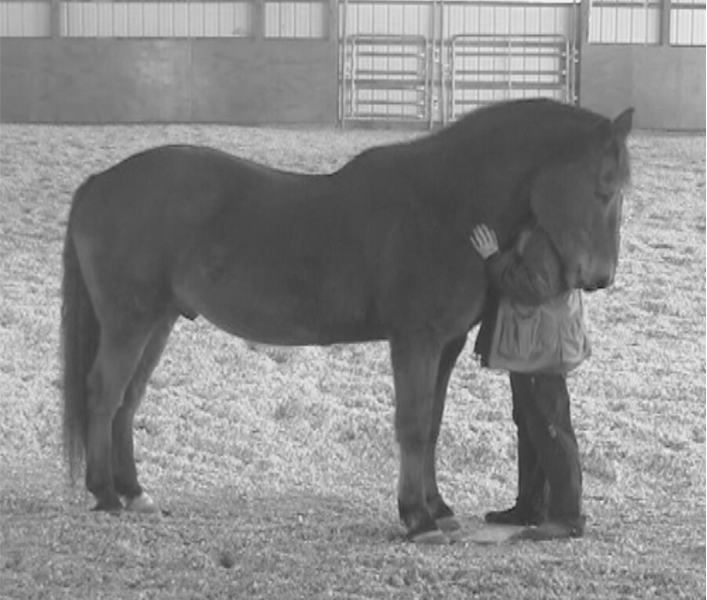
Robin – my best friend and performance partner
The new book, “Modern Horse Training: A Constructional Guide to becoming Your Horse’s Best Friend” will be published April 26, 2023. It will be available through my web site: theclickercenter.com and through Amazon and other booksellers. Look for it in hardcover, paperback and as an ebook.
I have a new book coming out on April 26, 2023: “Modern Horse Training: A Constructional Guide to Becoming Your Horse’s Best Friend”
The new book – coming April 26, 2023
I am no good at writing quick elevator pitches to let you know what the book is about. Instead while we are waiting for the publication date, I have been sharing a series of short posts that describe the overall development of my training.
I ended yesterday’s post by asking what were some of the component skills that helped me transform clicker training from an interesting concept into a workable training program for horses?
For starters my horses had helped me to formulate some guiding principles. These pre-dated my exploration of clicker training. I learned these principles directly from my horses. I also saw trainers I admired using them. So these principles are not specific to clicker training. I would say they are part of good training in general. These concepts take you to horse-friendly, learner-centric training choices regardless of the actual procedures used.
So what are they?
They begin with:
Safety always comes first – for both you and your horse.
That sounds as though it should be a given, but it’s not. I’ve watched far too many horse people ignore this basic principle. Trailer loading is a prime example. Look at all the fights you see around trailers. A given trainer may have gotten away with forcing frightened horses onto trailers. But load enough horses, and you’ll will meet that one individual who fights back with more power, more speed, more fear than you can handle. Someone will get hurt and those are odds I’m just not willing to take on.
Here’s a way safety always comes first plays out for me. Peregrine’s mother taught me the value of ground work. Her neurological condition gave me this one simple rule. I never asked her for something under saddle which she had not shown me she could do on her own. If she couldn’t walk beside me around my work space without spooking at the goblins, she wasn’t ready to be ridden. If she couldn’t trot in balance without a rider, I wasn’t going to get on and expect her to know how to trot.
This rule kept us safe. It’s a good rule that I have extended to all the horses I work with. It means that ground work is an essential part of good riding. That’s also not a given. In 1993 when I first started exploring clicker training, ground work for most people meant lunging. That was pretty much it. You lunged your horse before you rode him to “get the bucks out”. Often that meant sending an unbalanced horse at speed around you on a circle. It wasn’t much fun for either the horse or the handler.
For me ground work meant so much more than this. I got Peregrine’s mother as a yearling and later I bred her to get Peregrine. Because I raised both my horses, ground work meant all the handling of young horses – teaching them to accept grooming, haltering, basic leading, foot care, blanketing, basic medical care, etc. When you have only been around older riding horses, it’s easy to take these universals for granted. You forget that horses have to learn how to accept all these different intrusions into their personal space. When an older horse is hard to groom or doesn’t stand well for the farrier, he’s labelled as a “problem horse”. Clicker training helps us to reframe how we see these horses.
Ground work also meant teaching my horses the basic skills that let me go for walks with them. It meant the T.E.A.M. ground work skills that began to move me away from the conventional handling that I saw around me in the local riding stables. It also meant the classical work in-hand that I was learning from Bettina Drummond, Nuno Oliviero’s principle student. And it meant round pen training that I first figured out based on a magazine article and later expanded upon after watching John Lyons. So I brought to clicker training an extensive and varied repertoire of ground work.
I also understood the connection between ground work and riding. The first time I watched John Lyons at one of his symposiums, he said “I solve ground problems on the ground and riding problems under saddle.” I could see that wasn’t what he was doing, but he really believed what he was saying. Yes, he was using his version of round pen training to prepare a young horse for riding. That connection was there. But after that in his mind there was a separation.
A couple of years later he stopped making that distinction. His stallion Zip had shown him how connected ground work and riding really were. I never heard him talk about this directly, but you could see the difference. The first time I saw Zip, I loved his topline. He was round, he was soft, he was well balanced – all things I enjoyed looking at. But Zip had short, little pony gaits.
Lyons had not yet resolved this major training puzzle: horses will naturally change leg speed before they soften at the poll. In the new book I describe in detail what this means so I won’t go into it here. When you don’t solve this puzzle, the gaits are effected. Horses no longer have the big, beautiful, clean gaits that you would have seen in them as youngsters. Their gaits become compromised. It is so normal, we often don’t even see anymore how unbalanced and lame horses are becoming because of the way in which they are being ridden.
In his symposiums Lyons would use Zip to demonstrate a ground exercise Lyons referred to as the east, west, north, south lesson. It is a form of hazing. The horse wants to dodge to the left to escape from you, you drive him to the right. He ducks out to the right, you drive him back to the left. He tries to back up, you send him forward. He barges over the top of you, you drive him straight back. No matter which way the horse tries to duck out the escape route is blocked. After a while, the horse stands still in front of you. And when you tell him to move to the left or right, forward or back, he does.
This can be a brutal lesson if you take the brick-wall approach to it. (See https://theclickercenterblog.com/2023/04/13/) It can be an elegant lesson if you break it down into small steps and teach it with positive reinforcement.
I watched Lyons over a number of years, and I saw a lot of changes both in his horses and in the way he talked about his training. With Zip he demonstrated another core training principle: the longer you stay with an exercise the more good things you see that it gives you.
Every week Lyons would use Zip to demo the east, west, north, south lesson and every week Zip would get better at it. Lyons kept seeing more of what staying with a lesson gives you. In Zip’s case it resolved the leg speed puzzle. Zip gave at the poll before he changed leg speed. Solving the puzzle transformed his gaits. He became a beautiful mover. His gaits matched the promise of his topline. When he was in his twenties and completely blind, he moved better than he had in his early teens.
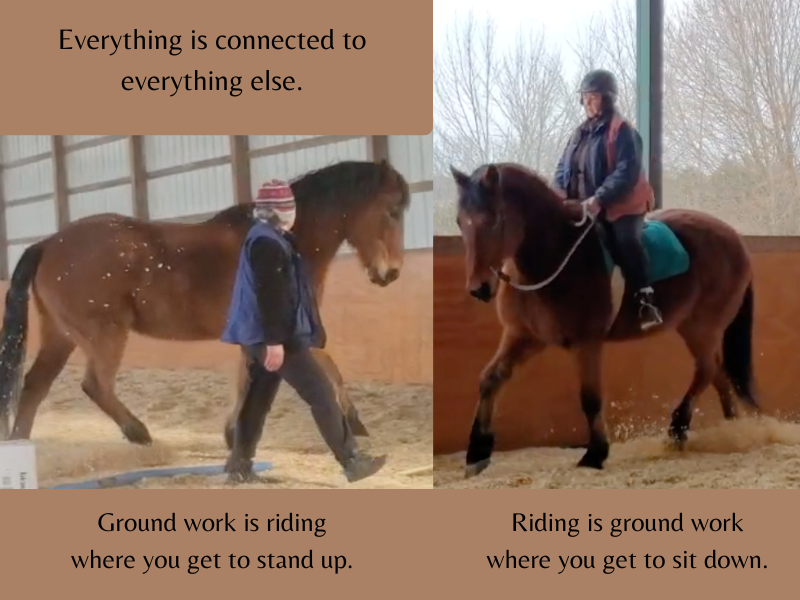
My horses had also shown me the clear connection between ground work and riding. So one of my favorite expressions is:
Ground work is just riding where you get to stand up and riding is ground work where you get to sit down.
Everything is connected to everything else.
This connection between lessons and especially between ground work and riding is key to the approach I have taken in “Modern Horse Training: A Constructional Guide to Becoming Your Horse’s Best Friend”. The fun of this way of structuring your training is it is very sneaky. You are never working on just one thing. Every lesson truly is connected to all other lessons. And because I am breaking complex lessons down into small components and I am using positive reinforcement procedures, safety always does come first – and fun is the result.
The new book, “Modern Horse Training” will be published April 26, 2023. It will be available as a hardcover, a paperback, and as an ebook. You’ll be able to order it through my web site, theclickercenter.com and also through Amazon and other booksellers.
I have a new book coming out on April 26: Modern Horse Training
The subtitle of the book is: A Constructional Guide to Becoming Your Horse’s Best Friend.
In the clicker training community we’ve been talking a lot recently about constructional training. Dr Jesús Rosales Ruiz has brought to our attention the work of Israel Goldiamond. Dr Goldiamond was a clinical psychologist. Instead of trying to “fix” problem behavior, he constructed new repertoires. The analogy would be instead of trying to fix a falling down, hundred year old barn with a leaky roof, cracked foundations and ceilings that are too low for horses, you build a new barn that’s purpose-built for what you need. It has none of the problems of the falling-down barn. The old barn may still be on your property, but you don’t have to use it for your horses. The old, unwanted behavior may still exist. Nothing is ever erased or unlearned, but there is a clean, new behavior in repertoire that you can call on instead.
The term constructional training appeals to me. I like building things. The idea that we can teach complex behaviors by first breaking them down into smaller component parts is not new to me. My horses showed me this decades ago.
Nor is this a new idea in the horse world. It is how good trainers train. But that doesn’t make it the norm. Far from it. What we see around us are people who confront problems head on. The horse world is full of instructors who tell their students to send their frightened horses forward, to make them obey, to show them who is boss. Sometimes this works and sometimes it puts the rider in the hospital and the horse on a trailer to the auction yards.
My Path to a Constructional Mindset I have always been horse crazy. Like so many others I grew up in a family that just didn’t share my obsession over horses. My parents did at least provide me with the opportunity to ride. Over time I developed a decent seat. I could ride, maybe not that well, but riding out over rough terrain, riding at speed, riding bareback were all well within my capabilities. As a teenager, I thought I knew how to ride. As a young adult, I decided I was wrong. Yes, I could ride, but I didn’t really know how to ride. There’s a difference. And I certainly didn’t know how to train. I wanted to learn, so I started to take lessons at a local hunter jumper stable. To choose the stable I opened the phone book – yes, this was a time before computers when there were actual phone books with yellow pages directories. When I chose the stable that was closest to my house, I had no idea what I was getting myself into.
The owner had been around horses all of his life. He had grown up poor with very little formal schooling. I’m pretty sure he would not have been able to read the words I’m writing here, but my goodness he could read horses. He was a superb horse person. Talk about horse whisperers – he was definitely one of them.
He was running a hunter jumper barn because that’s where the money was in the northeast, but that wasn’t where he started out. At one point he had been top ten in the country – in bull riding.
That’s certainly not a typical background for a trainer at a jumper barn, at least not in this region. It made for “exciting” lessons. He had no physical fear. And he didn’t understand fear in others, not in people and certainly not in horses. His approach to fences was to go straight at them, the higher the better.
In New York where I live the thoroughbred racing industry is strong. That means if you are looking for a riding horse, you will encounter a lot of thoroughbreds. The horses in the school line were all thoroughbreds with only one exception, and they were all literally off the track. On Sunday the horses would be racing. On Monday they would be on a dealer’s van heading for the riding stable. The dealers knew Pick was looking for cheap horses, horses that weren’t fast enough, or sound enough for the trainers to hang onto, but who might do as riding horses.
These were horses who had never jumped a fence in their lives – at least not with a rider on board. Pick would set up a line of fences. He’d have one of the teenage boys who rode for him get on and they’d send the horse over the jumps. If a horse balked, they would build a chute. Two men would stand on either side of the chute with lunge whips while the rider drove the horse forward with a crop.
When the horse cleared the fence, the rails went up. They wanted to see what the horse could do.
The horses that took the fences down, or that came up lame afterwards were put back on the trailer and were sent back to the dealer’s yard. The others stayed and were put into the school line. I rode some amazingly athletic horses. I also rode some very frightened, unbalanced, and untrained horses. And I learned a lot about brick-wall training.
Brick-wall Training Brick-wall training refers to an approach to problem solving where you go head-on into the problem. It was the reality I saw at this stable, and it’s a metaphor for much of what we encounter in the rest of society. If there’s a brick wall in front of you, you head over it, no matter how tall or how wide it is. You either make it over, or you crash. Oh well.
Brick-wall problem solving is fine if you are athletic enough, strong enough, sound enough, brave enough to make it over the fence. Many of those thoroughbreds were. But many of the riders weren’t. Pick lost a lot of potentially good riders to broken bones and just plain old fear.
I very quickly decided to opt out of the group lessons. I watched as many as I could, but I chose to take private lessons instead. I wanted to control what I was being taught. I wasn’t interested so much in going over the fences. That was a fun outcome, but only if the fence was jumped well. I wanted to know how to ride a correct corner that would bring me into a balanced approach to the fence. In other words, I was looking for the components that made for a successful ride. Because I had ridden before, I knew what I wanted to learn.
I baffled Pick. He thought riders just wanted to jump. In my lessons I would stop and ask questions. It turned out he knew a lot about balance. If you asked the right questions you could learn a lot from him. I asked a lot of questions, and I did indeed learn a lot about good riding. By watching the group lessons I also learned what I didn’t want.
I couldn’t go straight at brick walls, not with my horse. This was Peregrine’s mother. I bought her from Pick just before she turned a year old. He had bred her to be a racehorse, but he was just as glad to sell her early. She passed a pre-purchase vet check. Now that I’ve seen more pre-purchase exams, I know the vet was pretty superficial with this one. He wasn’t expecting to see any problems in such a young horse so he didn’t look for any. Not long after that exam, I began to see the first small signs that there was something terribly wrong.
At first, I saw her dragging her hind feet. When I asked Pick about it, he said she was just being lazy. How many times since then have I heard people say that about a horse?
When I saw her fall for the first time, I called the vet back in. This time he looked more closely, and he diagnosed her as a wobbler. She had spinal cord damage. When I started asking questions and doing some digging it was clear that the cause was a handling incident that had gone wrong. She was tied tight to a post while a teenager pulled her mane for the first time. She protested. He persisted. She fought back. She was against the four foot kick board of the arena. Her only escape was over the rail so she jumped it with her head tied tight. I’ll leave it to you to imagine the rest of that scene.
The incident occurred shortly before I bought her. I wouldn’t have known anything about it except one of the visible signs of the event was a swollen hind leg. If I hadn’t seen the swelling during one of my visits to the barn, no one would have said anything about it.
The swelling went away, but the damage to her spinal cord remained. The injury left her with limited awareness of her hindquarters. Wobbler syndrome is descriptive even if it doesn’t tell you very much about what has happened internally. It can be caused by injury, and there is also equine protozoal myeloencephalitis (EPM) which at that time was just beginning to be understood. In either case, even the vets at Cornell had no treatment to offer me. My local vet told me I would never be able to ride her, and he advised me to put her down.
I couldn’t do that. I couldn’t end her life simply because I wouldn’t be able to ride her. That wasn’t right. Nor could I afford to retire her to a pasture somewhere while I got a second horse to ride.
The vet told me that her condition would deteriorate over time, and I would eventually be forced to put her down for safety reasons. That was the future I had in front of us, but in the meantime I needed to deal with what she was struggling with on a day by day basis.
For starters she had trouble going in and out of her stall because there was a sill over the threshold that was intended to keep the bedding from spilling out into aisle. I thought if I taught her to go over ground poles, she would have more confidence stepping over the sill. So I set out a round jump pole. That terrified her. She refused to go anywhere near it. I could have forced her over it. That’s the “show them who’s boss” approach to training I had seen modeled all around me at the riding stable. I didn’t want to fight with her, so I took a different approach.
A ground pole was too hard. That was too big a “jump”. I swapped it out for a flat board that wouldn’t roll if she stepped on it. She was still afraid. She couldn’t manage it.
I tried a lead rope. That was still too hard. So then I drew a line in the sand. That she could walk over. From the line in the sand, I reintroduced the lead rope, then the flat board, and the round ground pole. She was eventually able to jump a small cross rail.
I didn’t approach the problem head on. She taught me how to break complex tasks down into smaller and smaller steps until I found something she could do.
Over time she learned to compensate for the nerve damage. My vet warned me never to ride her. He told me it was just too risky. She might lose her balance and fall on top of me. I listened to him. I had seen her fall often enough to know he was right, but when she was ready, I rode her. She was the horse who introduced me to classical dressage. She was the first horse I taught to piaffe. It was because of her that I became balanced obsessed. That’s what kept her from falling. That’s what kept us both safe, and that’s what formed the core of everything I teach today.
Here is the simplicity of what she showed me:
Break complex tasks down into smaller, simpler components.
Find something – no matter how small, no matter how far away from your goal behavior it may seem to be – where you can get a “yes answer” response and begin there.
Build in small steps.
Build in repeating patterns.
At that time I didn’t know anything about clicker training. I didn’t have the clarity of the marker signal. I wasn’t talking about movement cycles or loopy training. I didn’t call any of what I was doing constructional training, but the elements were all there. I was primed to be a clicker trainer. And I was primed to be drawn to the language of constructional training that Goldiamond has given us.
The new book, “Modern Horse Training“, has grown out of those powerful lessons learned over forty years ago. What we have now are the words to describe what the horses have been showing us. Horses are truly our best teachers. We just need to listen to them and they will open their hearts and their wisdom to us.
The publication date for “Modern Horse Training” is April 26, 2023. I’ll share more about where it can be ordered as we get closer to the date.




 The Clicker Center Blog