5GoToSea: Pt. 5: Extinction Reveals The Past

Resurgence and Regression: Understanding Extinction So You Can Master It

From a presentation given by Dr. Jesús Rosales-Ruiz during the 2014 Five Go To Sea Conference cruise.

This is Part 5 of a 15 Part series.

Part 1: The Elevator Question
Part 2: The Translation to Horses: Is Personality Expressed or Suppressed?
Part 3: Unraveling the Regression Mess
Part 4: Extinction and Shaping
Part 5: Extinction Reveals The Past

Part 5: Extinction Reveals The Past

The Extinction Process
In the previous section I  said that extinction produces resurgence and regression.  I went on to talk about extinction without defining it.  In general we understand the meaning of that term, at least how we would use it in everyday language.

Here’s the definition Jesús gave us:

“When reinforcement is no longer forthcoming, when a response becomes less and less frequent, you get operant extinction.”

How does this play out?  What do you see in your animals?

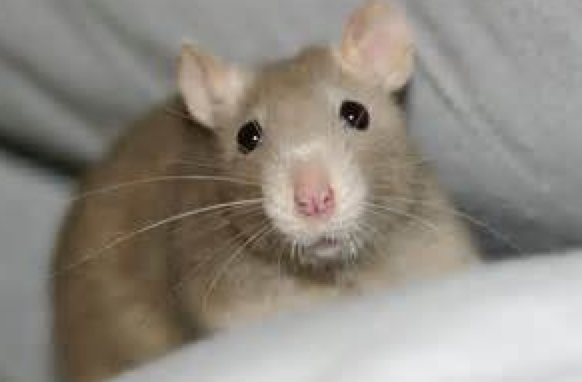
In the controlled environments of a lab experiment, here is what you might see:  A rat is being reinforced consistently for pressing a lever.  When that behavior is well established, the experimenter no longer reinforces lever pressing.  When the behavior fails to pay off, the rat shows a sudden flurry of lever pressing behavior.  When this fails, the rat exhibits more aggressive types of behaviors.  In humans we would equate this to the behavior you see when vending machines fail.  You start out jiggling the knobs and progress towards pounding on the machine.

rat 2The aggressive behavior is followed by a period of the rat giving up.  He ignores the lever.  Then the rat tries again with a flurry of activity, trying to see if the original, reinforced behavior is once again working. The whole cycle repeats itself, but the bursts get smaller and smaller, and the pauses in between become longer.

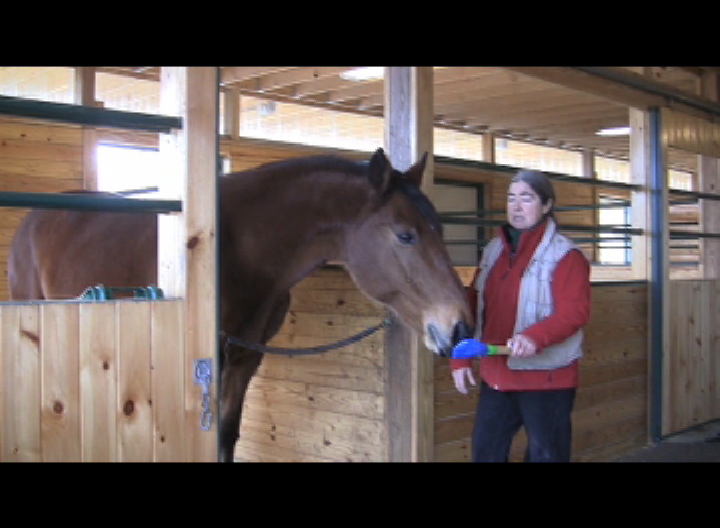
Throughout all of this process the rat is clearly experiencing emotions we would not want to see in our horses.  When lever pressing fails to work, the rats become aggressive.  In our horses we see displacement aggression.  The horse is frustrated.  A behavior which was reliable is no longer working.  If other horses are nearby, you may see the horse pin his ears and snake his neck out to warn the others away.  Or he may grab at his lead rope, or nip at the handler’s sleeve.

Remember – you are seeing behavior that has been modeled for this horse.  You are seeing his training history.  And perhaps you are also seeing his herd background.  If he’s lived in crowded/confined conditions that promote more horse to horse aggression, it’s possible that’s what you’ll see acted out.

It would be interesting to look at two groups of horses – one containing horses that grew up in stable herds living in large, open spaces.  The other would have horses that were raised in much more confined spaces where competition for resources created more horse to horse aggressive interactions.  What difference, if any, would you see when these horses are exposed to a mild extinction process?  What behaviors would regression reveal?  What does your knowledge of your own horse’s background predict?

For horses with known backgrounds it would be interesting to collect data on their behavior when they are faced with a mild extinction process.  If you know the conditions under which your horse was raised, what type of behaviors would you expect to see during an extinction process?  Would he be the one “banging on the coke machine”, or would he cope well with the change in reinforcement rates?

Coming Soon: Part 6: Accidental Extinction

Please note: If you are new to clicker training and you are looking for how-to instructions, you will find what you need at my web sites:

theclickercenter.com                    theclickercentercourse.com

5GoToSea: Pt 4: Extinction and Shaping

Resurgence and Regression: Understanding Extinction So You Can Master It

Five go to sea bannerFrom a presentation given by Dr. Jesús Rosales-Ruiz during the 2014 Five Go To Sea Conference cruise.

This is Part 4 of a 15 Part series.

Part 1: The Elevator Question
Part 2: The Translation to Horses: Is Personality Expressed or Suppressed?
Part 3: Unraveling the Regression Mess
Part 4: Extinction and Shaping

Part 4: Extinction and Shaping

Extinction
Often clicker trainers say they never use extinction.  I certainly work hard to set up my training so the horses aren’t put into the kind of guessing game that can lead to outbursts of frustration and aggression.  That’s something I very much want to avoid. But that doesn’t mean I don’t use extinction.  That’s what Jesús’ talk made so very clear.

To the people who say they never use extinction, his response is: “What do you mean you never use extinction!  Extinction is at the heart of shaping.  Shaping is differential reinforcement.  It’s the interplay between positive reinforcement and extinction.  So if someone says they aren’t using extinction, probably they don’t understand what they are saying.”

That’s such a wonderfully blunt and typically Jesús comment.  He went on to explain what he meant.  As he said: “If you don’t understand extinction, you won’t be able to master it.”

Regression and Resurgence
Jesús makes a distinction between regression and resurgence.

In regression you revert back to previously extinguished behaviors.

In resurgence you revert back to previously reinforced behavior.

This isn’t just semantics.  Regression and resurgence emerge out of different training strategies and produce different outcomes.

Regression is a term that is used in psychoanalysis and can be defined as: “If the present behavior is not capable of getting reinforcement, one reverts to older forms of response which were once effective.”  In other words, when a behavior that has been generating reinforcement is no longer working, the individual will revert back to behaviors that have worked in the past. The order in which this unfolds is significant.

Under stress you will revert back to an older way of behaving.  If that behavior is not reinforced, you’ll go through another extinction process.  You’ll revert back to even older behaviors.  You’ll keep trying things and trying things, until you either give up entirely, or you are pushed to creativity.  This can be a stressful process which is why some people think of creativity as an unpleasant experience.

Extinction History
Regression emerges because a behavior which normally earns reinforcement is no longer working.  Often we think of extinction as simply a procedure that’s intended to reduce behavior.  You don’t like a dog’s barking, so you never reinforce it in the hope that the behavior will go away.  This simplistic view misses an important key to understanding how to use extinction. The behaviors that emerge in an extinction process are not random. Understanding the order lets you master the process.

That’s one of the many gems from Jesús’ presentation.  Here are some more:

Jesús described extinction as the mirror image of reinforcement.

Extinction tells you what was reinforced in the past.

Reinforcement tells you what behaviors you are building for the future.

I wrote about this in Part 2 of this series: “The Translation to Horses.”  When you are first learning about clicker training, if your handling confuses the horse and puts him into an extinction process, the behaviors he throws at you tells you more about his past than his present.  Don’t blame yourself for the outburst.  Your current training choices didn’t create the behavior you’re now dodging.  Turn your spotlight instead on his past.  That’s where the behavior was learned.

You may be the catalyst, but you are not the cause.  That’s good news.  You don’t have to take his behavior personally. The cause sits not in the present, but in the past.  It’s only natural to become worried by the emotional reaction you’re seeing.  People sometimes inadvertently end up compounding the problem. If their handling skills are clumsy or they don’t yet know how to manage the environment, they can put the horse into even more of an extinction process.

I’ve seen this in beginner handlers.  They don’t yet understand how much a lack of clear criteria can impact a learner.  The horse has offered three or four clickable moments, but the handler has missed them all.

Those missed clicks can put the horse into an extinction process that leads to emotional outbursts.  The handler becomes rattled by this unwanted behavior.  She becomes even more uncertain and inconsistent which leads to more frustration in her horse.  What is he supposed to do?  His growing anxiety leads to displacement behaviors and the emergence of older, unwanted behavior.

That’s where video cameras can be so useful.  Video helps the handler to see the training from the horse’s point of view.  It reveals the good tries the horse is offering and helps the handler understand more clearly what she wants to be reinforcing.  And it aids in learning better handling skills that lead to clean, consistent teaching.

The solution to extinction bursts lies in embracing clicker training, not from running from it.  Through clicker training you’ll be building a repertoire of behaviors that give the horse alternatives to his old patterns.

Regression and resurgence reveal the past.

Reinforcement builds your future.

Coming soon: Part 5: Extinction Reveals the Past

Please note: If you are new to clicker training and you are looking for how-to instructions, you will find what you need at my web sites:

theclickercenter.com                    theclickercentercourse.com

5GoToSea: Pt 3: Unraveling the Regression Mess

Resurgence and Regression: Understanding Extinction So You Can Master It

From a presentation given by Dr. Jesús Rosales-Ruiz during the 2014 Five Go To Sea Conference cruise. toppic1

This is Part 3 of a 15 Part series.

Part 1: The Elevator Question
Part 2: The Translation to Horses: Is Personality Expressed or Suppressed?
Part 3: Unraveling the Regression Mess

Part 3: Unraveling the Regression Mess

Emitted Versus Permitted Behavior
What are the keys to unraveling the regression mess?

The first is to tighten up your training and learn how to set up the environment so the behavior you want is the behavior that is most likely to occur. Jesús made the distinction between emitted and permitted behaviors.

When behavior is emitted, you are waiting to see what the learner offers.  When behavior is permitted, you set up the environment so the behavior you want is the behavior that is most likely to occur.

If you’re waiting, waiting, waiting for the dog to sit or the horse to step on a mat, you may see lots of experimenting before you get something you want to click.  All that experimenting can end up as part of a chain.  And it could also lead to a regression into previously learned, but unwanted behavior.

With the horses we begin with very simple, easily isolated behaviors such as targeting.

With the horses we begin with very simple, easily isolated behaviors such as targeting.

With the horses we begin with very simple, easily isolated behaviors such as targeting and backing.  We set up the environment so the behavior is likely to occur.  You aren’t surfing an extinction wave of behaviors.  Your horse doesn’t have to do a lot of guessing.  The right answer is obvious and easy.

In those first lessons I have people start out with only twenty treats.  That limits how much training you can do.  Before your horse can get too confused or frustrated, you’re stepping away to get another round of treats.

You’re also using that time while you refill your pouch to assess what just occurred.  That first targeting session is just data collecting. You’re finding out if that’s a good starting point, or perhaps you need to find a different lesson.  A horse that is very shut down, or becomes easily stressed when he’s not told exactly what to do, may need you to start with an even simpler step than targeting.  This is a horse that may need to have the clicker carefully charged first by simply feeding one treat after another.  Once he’s showing interest in the food, you’ll add the clicker in.  Now it’s: click then feed, click then feed.  At this point the click is not yet contingent on a specific behavior. You are simply pairing the click with the food.

Once you think your horse is noticing the click and anticipating the food, you’ll begin to turn the click into a functional marker signal.   You’ll begin to pair it with the behavior.  You’ll pick something easy such as targeting, or perhaps a slight moving of his head away from your treat pouch.  It should be something you know you can get so the transition from charging the clicker to using it is a seamless one.

Designing an appropriate lesson plan is just part of the solution.  You also need to have clean handling skills and good timing.  Clicking late, clicking the wrong thing, clicking because you haven’t clicked for a while – all of these things will confuse your learner and lock in more unwanted behavior.  So work on your handling skills. Practice first, preferably in front of a mirror.  Borrow a friend to be your “horse”.  Use your video camera so you can review what you are doing. When your handling is quiet, clean, organized, and second nature, that’s what your training will become – quiet, clean, organized, and second nature.

Broadening the Repertoire
Good handling is part of the solution.  Another is to develop a broad repertoire of behaviors.  The more skills you teach your horse, the more options he’ll have besides aggression. Instead of regressing into aggressive responses, he’ll have other options that work.  This is where trust the process begins to make sense. We’ve all read the stories.  Someone has been struggling with a horse, not seeing much progress, and then the pieces all fall into place.  Instead of snapping at his handler, he’s backing up politely and dropping his head.  Instead of pulling away, he’s offering beautiful lateral flexions.  The older repertoire is still there. Given the right triggers, you might still see him regressing back into “childhood”, just as that professor regressed back when she was trapped in an elevator.  But you’ve given him more tools.  That broader repertoire gives him more options. He’ll regress back to head lowering not aggression.

There were many more gems in Jesús’ talk, but this was a good one.  I’ll stop here for now and let you enjoy it.

Coming Soon: Part 4: Extinction and Shaping

Please note: If you are new to clicker training and you are looking for how-to instructions, you will find what you need at my web sites:

theclickercenter.com                    theclickercentercourse.com

5GoToSea: Pt. 2: The Translation to Horses

Resurgence and Regression: Understanding Extinction So You Can Master It

aftercruise1From a presentation given by Dr. Jesús Rosales-Ruiz during the 2014 Five Go To Sea Conference cruise. 

This is Part 2 of a 15 Part series.

Part 1: The Elevator Question
Part 2: The Translation to Horses: Is Personality Expressed or Suppressed?

Part 2: The Translation to Horses: Is Personality Expressed or Suppressed?

Personality Expressed or Suppressed
In the opening of his presentation on regression and resurgence Dr. Jesús Rosales-Ruiz defined regression and gave some examples in terms of human behavior.  I ended yesterday’s post with this statement:

Extinction reveals our history.roman ruins

How does this translate to horse training?  At the very beginning of clicker training the extinction process may reveal your horse’s training history. It helps us to understand the “childhood” our horses have had.  Did your horse have a fair introduction to people, or are there issues you need to know about?

In most cases when you introduce a horse to the clicker, it’s smooth sailing.  The horse quickly figures out the game. You may have to go through a little bit of explaining around the food, but for most horses this moves along without any major hiccups.  You hold a target up, he investigates it, click, you give him a treat.  Easy. Unless he’s one of the horses who has been punished for showing any self-expression.

If your horse has learned that being “well behaved” means he doesn’t offer any behavior you haven’t asked for, he’ll be good at following orders, but not taking the initiative. In fact your “well-behaved” horse may have learned that offering behavior is dangerous.  The best way to avoid punishment is to wait to be told what to do. This is why I put well-behaved in quotes.  Is he well behaved in the way a clicker-trained horse can be?  Or is he simply not offering much in the way of behavior?  There’s a huge difference.  In the first, the personality is expressed.  In the later, it is suppressed.

When you hold out the target, a suppressed horse may be stuck for answers.  He doesn’t know what you want. The “right answers” that normally work don’t seem to apply in this new situation.  This horse is being presented with a puzzle that can make him feel very uneasy.  In the past guessing wrong has meant being punished.

Extinction Reveals the Past
At first this horse may try offering the one or two things that might possibly fit this situation. When those don’t work, he’ll become aggressive. He’s going to protect himself from the punishment he’s knows is coming when he doesn’t respond right away.  Your “well behaved” horse is suddenly charging you with teeth bared.  It’s easy to blame clicker training or the treats for this sudden turnaround in behavior, but I’ve always seen it very differently.  I’ve always said that what is happening is the training history of the horse is being revealed.  Jesús’ talk confirmed this.

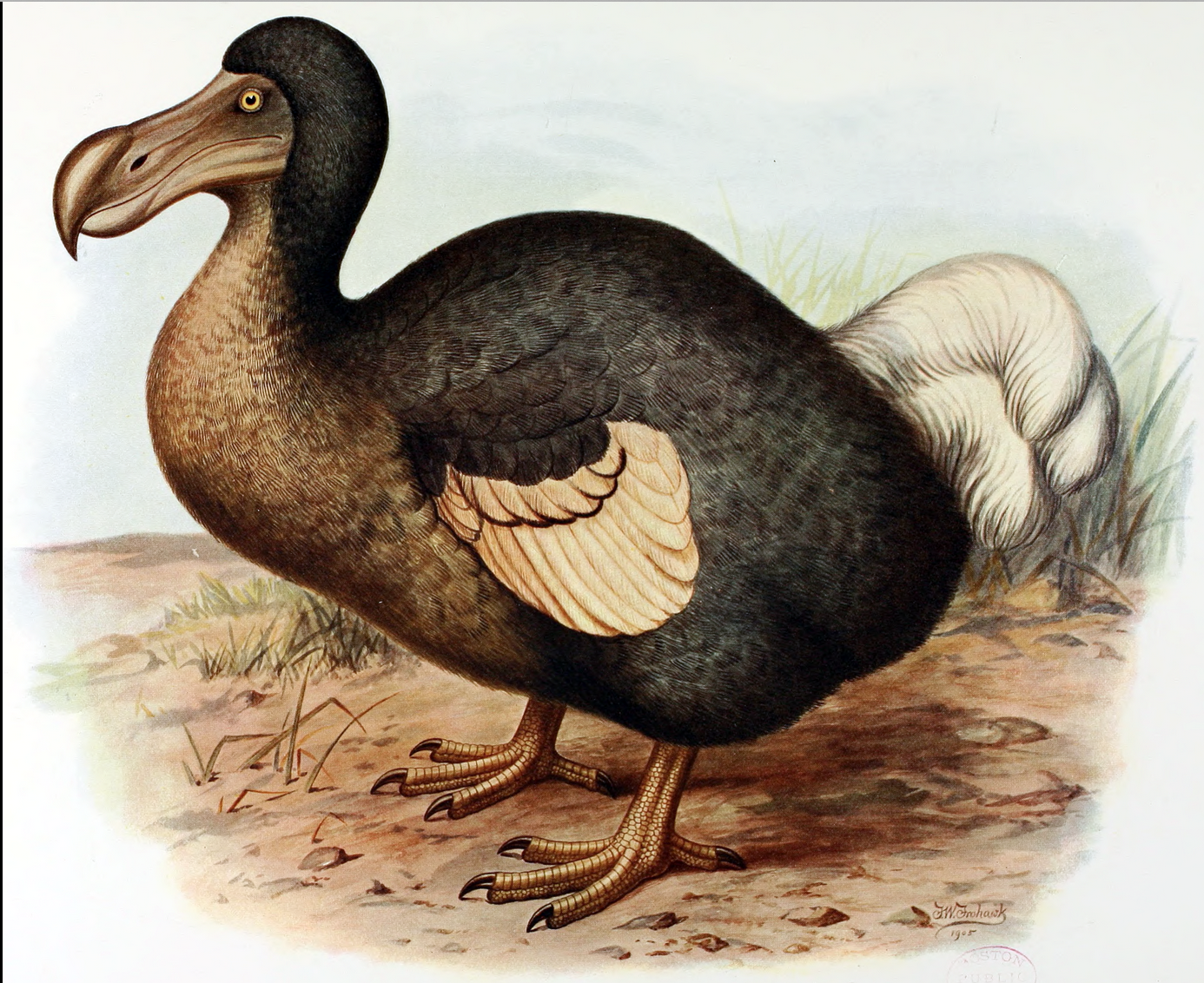
Often what we refer to as “well behaved” horses are really horses whose behavior and personality have been shut down through the use of corrections.  They have learned to wait to be told what to do.  Offering behavior, expressing their personality has been punished.  Give them a command they know, and they will respond promptly.  They can seem like the perfect horse.  Safe, easy to direct.  But put them into a situation where they don’t know the answer – in dodo birdfact they really don’t even understand the question – and you will begin to see the extinction process unfold.  Extinction follows a predictable pattern.  These horses will take you back through the stair steps of how they have been treated, and often the story they tell is not a pretty one.
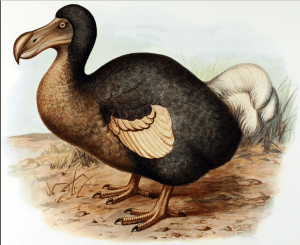
When a horse is not sure of the “safe” answer, he’ll begin to regress back through his training history.  You will see the behavior that has been “swept under the carpet” by suppressing it with corrections.

How do you avoid this regression back into unsafe behavior?  The early steps of clicker training are very structured.  I make use of protective contact so the horse is free to interact – or not.  This lets me see what kind of a learner I have so I can tailor those early steps to the individual. I design my lessons around very small steps so I can keep the training loop clean.  That doesn’t just mean that the horse performs the intended behavior.  Everything matters.  How he takes the treat matters.  How long he hesitates before beginning a new cycle matters.  How quickly he performs the desired behavior matters.  These all tell me something about the emotions he’s experiencing and those definitely matter.  My goal in this first foray into clicker training is to avoid the kind of uncertainty that leads to frustration and a regression back through older learning patterns.

Details matter – especially in shaping.  Jesús showed a couple of video examples of shaping where the loop was not kept clean.  In one a dog was going to be reinforced for coming back to the handler away from distractions.  While the instructor was explaining the lesson, the dog’s handler was listening to her, not paying attention to her dog.

The dog started surfing through all the behaviors that had been reinforced in the past. What should he do to get his person focused back on him?  He started with head bobs, moved on to sitting, then a play bow into lying down and finally he started jumping up on his person.  These were all behaviors that had previously been reinforced, sometimes unintentionally.

The instructor finished describing what she wanted the handler to do, and the formal “session” began.  The instructor deliberately distracted the dog while the handler tried to call him away.  The dog returned fairly promptly to his handler, but the behavior included a sit into a play bow followed by the dog lying down, then jumping up on the handler.  So yes, the dog did indeed return to the handler, but the recall now included these other unwanted behaviors.

This is why I stress so much how important it is to pay attention to details.  When you are first starting, it can be hard to keep track of everything, but details matter.  Yes, you can get your horse touching targets.  Yes, you can have a lot of fun. Yes, clicker training can be very easy.  But if you aren’t being attentive to details, you can miss a lot of important signs that your horse may not be fully understanding this new game.  If your horse isn’t sure what is wanted, you could see a regression through his past training history.  He’ll be telling you what he thought of how he’s been treated, and often the tale is not a pretty one!

When you are brand new to clicker training, and especially if you are also new to horses, this can be a hard dynamic to understand.  What you hear about clicker training is how much fun it is, how much horses enjoy it.  So you give it a try. But instead of smooth sailing, your horse falls apart.  Instead of having a wonderful time, you’re dodging teeth.  You’ve been promised a dream horse, and all you have is a nightmare.  Of course, you blame clicker training and all of the treats you’re feeding for the horrible behavior you’re seeing.   But what can you do?  You don’t want to go back to punishment-based solutions.  You keep hearing from others that you need to trust the process, so that’s what you do.  You continue on determined to solve the riddle of your horse’s regression into nightmare behavior.

Coming tomorrow: What it means to trust the process: Unraveling the regression mess.

Please note: If you are new to clicker training and you are looking for how-to instructions, you will find what you need at my web sites:

theclickercenter.com                    theclickercentercourse.com

Resurgence and Regression: Five Go To Sea Conference Presentation

It’s been just over a year since the first Five Go To Sea conference cruise.  Kay Laurence organized it to celebrate her 60th birthday.  She invited Ken Ramirez, Dr. Jesús Rosales-Ruiz and myself to participate in a five day adventure in the Caribbean.

Alex tells the best stories

Planning for our Caribbean adventure during the winter Clicker Expo: note the snow in the background. We were definitely looking forward to the April cruise.

If you’re counting, that’s four.  Five referred to the each of the conference attendees who joined us.  The reference goes back to Enid Blyton’s series of children’s books: “The Famous Five” and the many adventures they went on.


Five go to sea banner


my-roomfrom-outsideAdventures we certainly had.  This was my first time on a cruise ship, my first time on the open ocean, my first time in the Caribbean.

ocean view from ship

For me, it was the perfect mix of intense learning and holiday adventure.  We spent our days at sea engaged in the conference. Each evening from the top deck we watched the sun set over the ocean while we played the learning game PORTL.  That was followed by more conversations at dinner in one of the many restaurants the cruise ship had to offer.

jrr-teaching

Jesús and the son of one of the conference participants deeply engaged in a PORTL learning experience. Note: Jesús is the one being “trained”.


On excursion days we headed off to explore the Islands we stopped at.  People went snorkeling with sea turtles and dolphins.  Kay took a group Segwaying through the historic district of one of our ports of call.  I joined Ken one evening to go zip lining through the treetops of a tropical forest.

I returned home with a notebook bulging with notes.  Our days had not followed the usual format of conferences where you have rigid time schedules: this lecturer is presenting from 10:00 to 11:00, and then he has to stop so another speaker can begin. No, this conference was centered around the ideas we were presenting and the questions people had.  The schedule was flexible.  We could give each topic the time it needed.  If we found a gem that needed mining, we took the time to explore it.  We could each contribute, ask questions of the other presenters, add our own take on the subject.  What evolved through this more relaxed format was an amazing exchange of ideas.
My notebook was stuffed full of page after page of things I wanted to think about further.  For me the highlight of the conference was Jesús’ talk on Regression and Resurgence. I had first heard him give this talk at the Clicker Expo during the winter.  During the cruise, it was my number one request.  I wanted to hear that talk again.  Because we had the luxury of time, Jesús expanded beyond what he had presented at the Expo to give us a much deeper understanding of the subject.

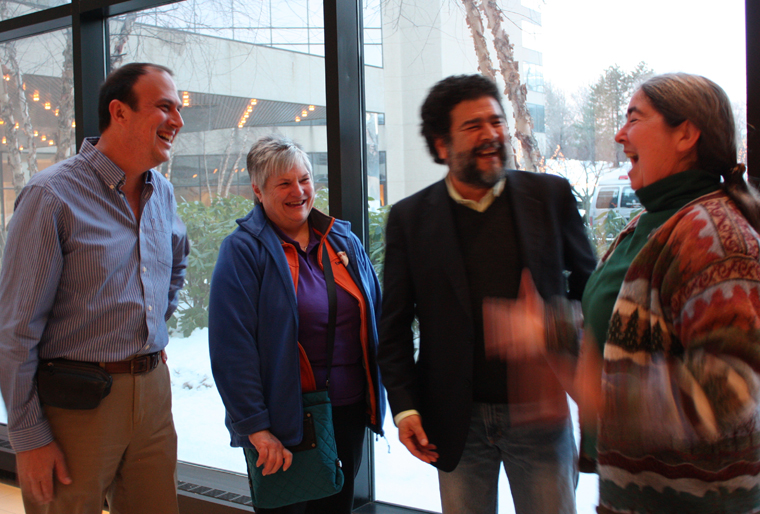
Jesús with two of the conference participants enjoying the perfect setting to discuss training questions.

Jesús with two of the conference participants enjoying the perfect setting to discuss training questions.

To help process everything he covered, when I got home, I wrote a detailed report on this presentation for my on-line course.  In it I described both what Jesús had covered and then I related each topic directly to horse training.  If you work with other species, I think you will find that the translation is still relevant.

Posts of this sort are read, enjoyed, and used at the time they are written, and then they get buried under the mountain of other posts that come into our in-boxes. Almost every day I will read questions from people that make me think about Jesús’ talk.  His material adds so much depth to our understanding of how shaping works.  It is fundamental to our understanding of the training. His talk shouldn’t be buried in the archives of a computer. It needs to have a more public and permanent home, so I am going to post it here in my blog.

It is a long post, some forty pages overall.  That’s much too long for a single blog, so I am going to present it instead like one of Dickens’ novels.  You’ll get it in installments so you can enjoy it one gem, one chapter at a time.

Alexandra Kurland
theclickercenter.com
theclickercenterblog.com
theclickercentercourse.com

fivegotosea.com

Resurgence and Regression: Understanding Extinction So You Can Master It

From a presentation given by Dr. Jesús Rosales-Ruiz during the 2014 Five Go To Sea Conference cruise.

This is Part 1 of a 15 Part series.

Part 1: The Elevator Question


The Elevator Question
elevatorWhat would you do if you were trapped in an elevator?  You’d probably push all the buttons.  You’d bang on the door. You’d call out in the hope that someone would hear you.  But what if none of those things worked?  What would you do then? Would you wait patiently for the help that you know would be coming?  Or would end up huddled in a corner calling out for your mother?  That’s what happened to a professor at a conference in Mexico.  By the time help arrived, she had regressed back to very early childhood behavior.

Our horses sometimes show similar types of regression.  You aren’t reinforcing your horse at your usual rate.  He becomes confused and frustrated.  What do you want? His version of pushing all the elevator buttons is throwing other behaviors at you that you’ve previously reinforced.  He’ll try lowering his head, putting his ears forward, “posing”. When those don’t work, he’ll regress further back.  He’ll nudge your arm. He’ll paw. He may even bite at you.  That got your attention!

Regression reveal’s an individual’s past.  When you’re tired and under stress, how do you behave?  Do you find yourself regressing back and behaving like a cranky teenager – or worse a spoiled toddler who needs to be put down for a nap?  What are we learning about the child that you were?

Regression
In his conference presentations on regression Jesús Rosales-Ruiz helps us understand this process.  He begins with several definitions of regression that are in the scientific literature.  One of the simplest is:

“If the present behavior is not capable of getting reinforcement, one reverts to older forms of response which were once effective.”

In other words under stress we tend to revert to older ways of behaving.  So regression is a product of an extinction process.  When behavior that was being reinforced no longer works, you regress back to previously learned behavior.  When that doesn’t work, you go back another step and then another.

As Jesús said, very tongue in cheek, during the extinction process we see behavior that was modeled in childhood. If one of his students is acting out, he tells them – “Don’t blame me.  Blame your parents.  You’re simply presenting behavior that was modeled for you in childhood.” If you want to learn about family dynamics, watch toddlers.

So extinction can reveal the history of the individual.

Coming tomorrow:  The Translation to Horses

Please note: If you are new to clicker training and you are looking for how-to instructions, you will find what you need at my web sites:

theclickercenter.com                    theclickercentercourse.com