In Search of Excellence: Effective Practice – Part Four

Part 4: What does Soccer have to do with Horse Training?

This is the fourth installment in a nine part series.  If you have not yet read Parts 1 through 3, you should begin with those. Part 1 was published on Nov. 16, 2014.

Part 1: “The Talent Code”:
Part 1 introduces Daniel Coyle’s book, “The Talent Code”.

Part 2: The Myelin Factor:
This section presents a short course in neuroscience centered around myelin and the role it plays in building new skills.

Part 3: Equine Simulators:
Part 3 looks at creative ways to build your handling skills BEFORE you work directly with your horse.

Part 4: What Does Soccer have to do with Horse training?
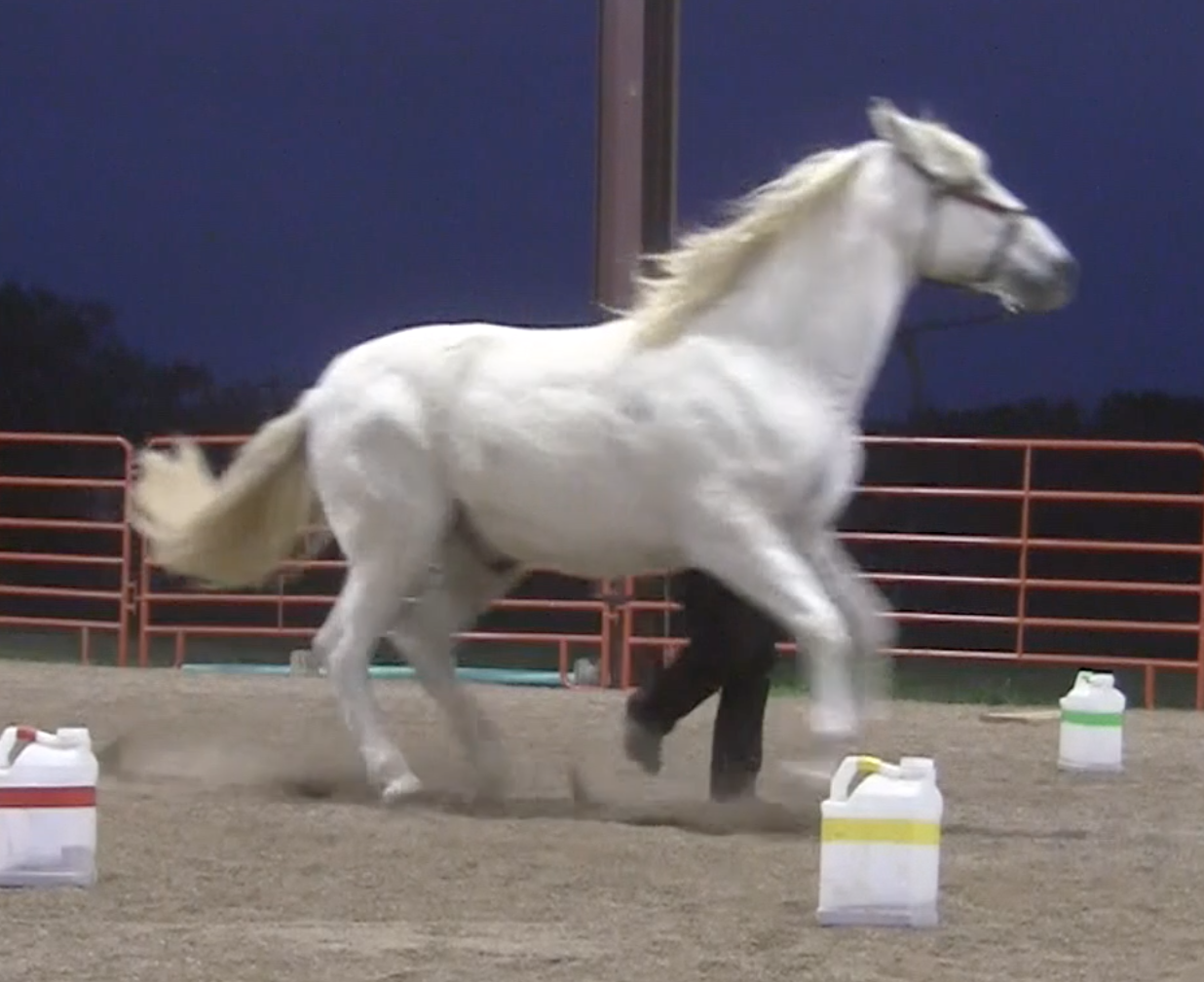
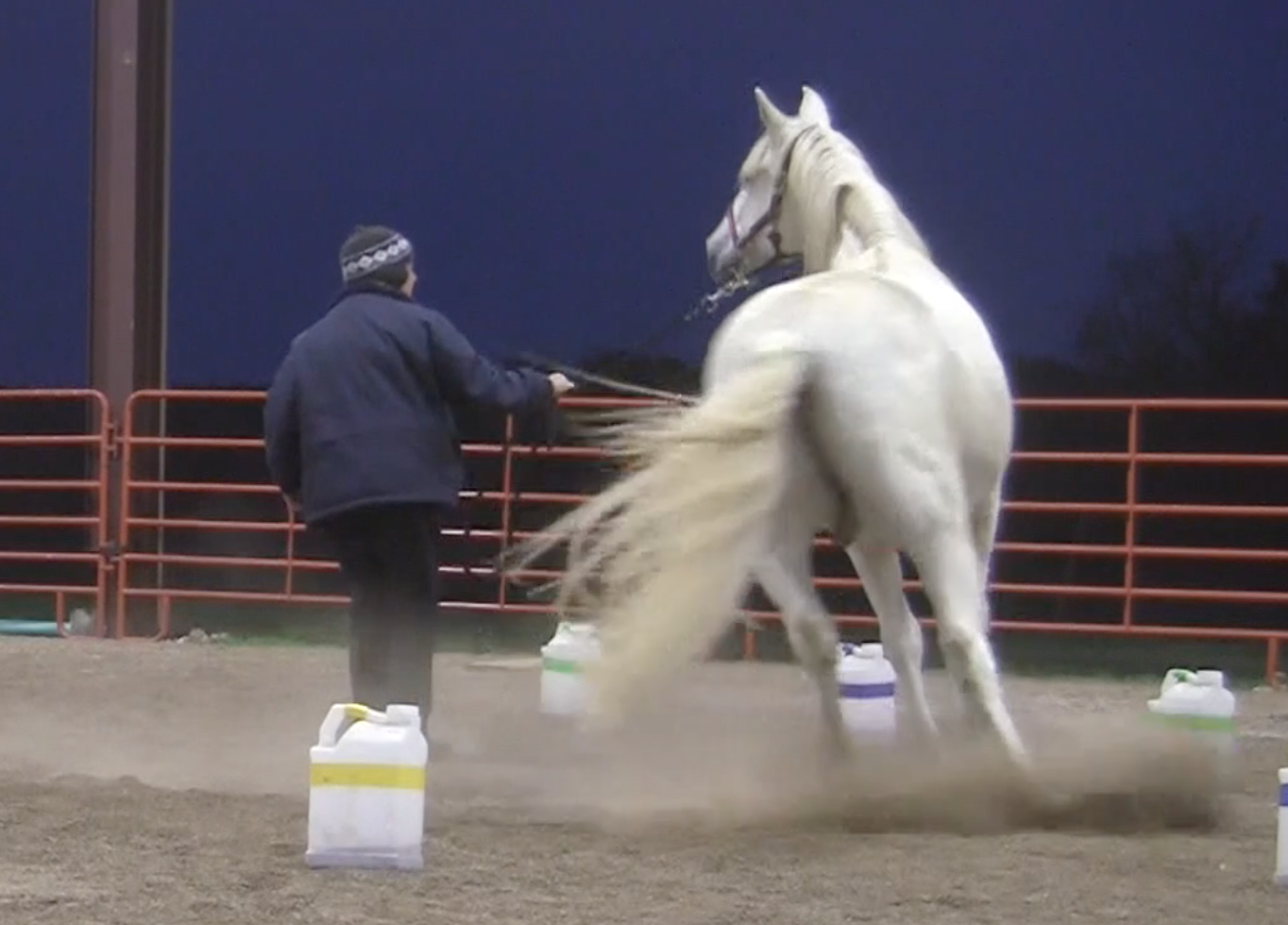
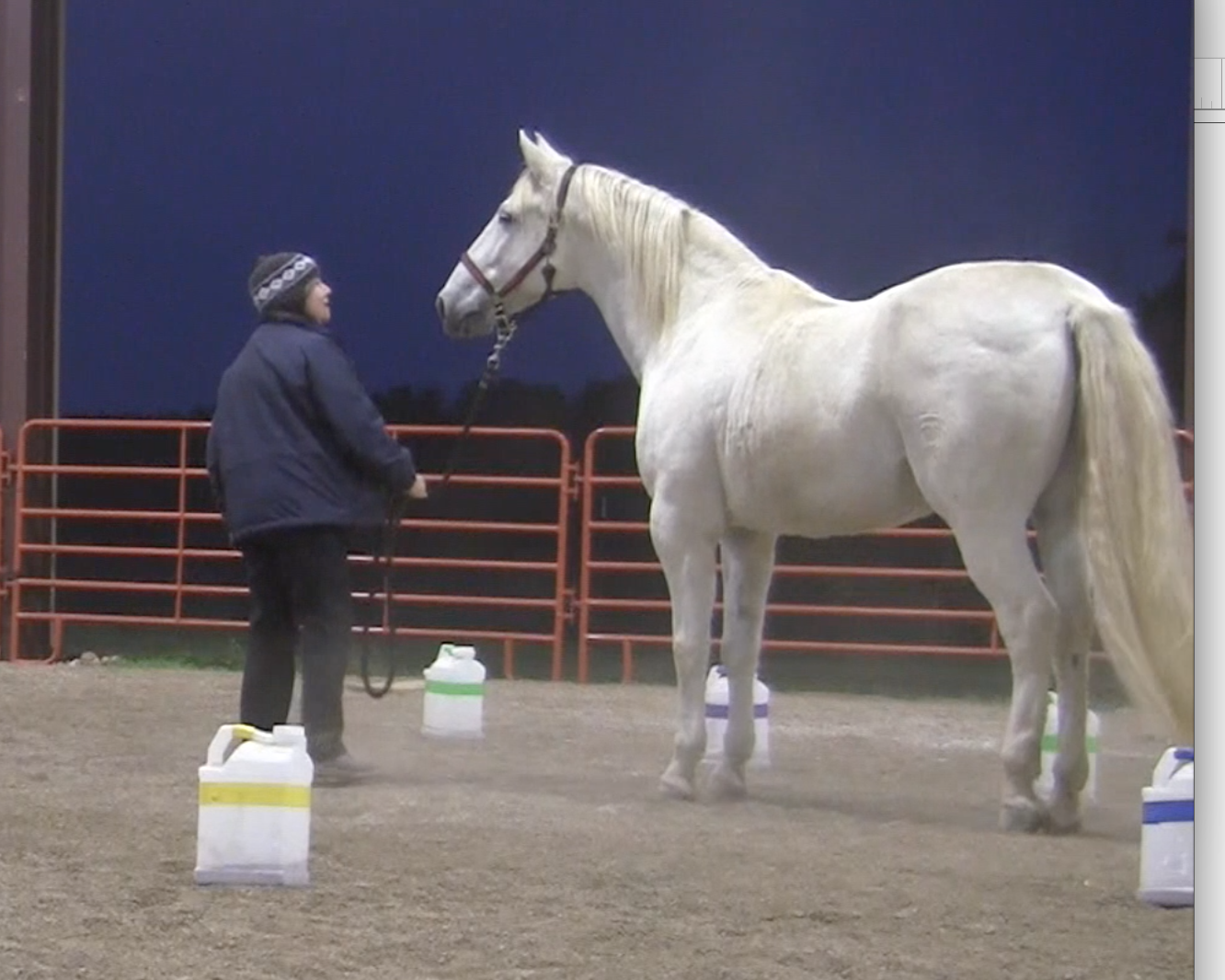
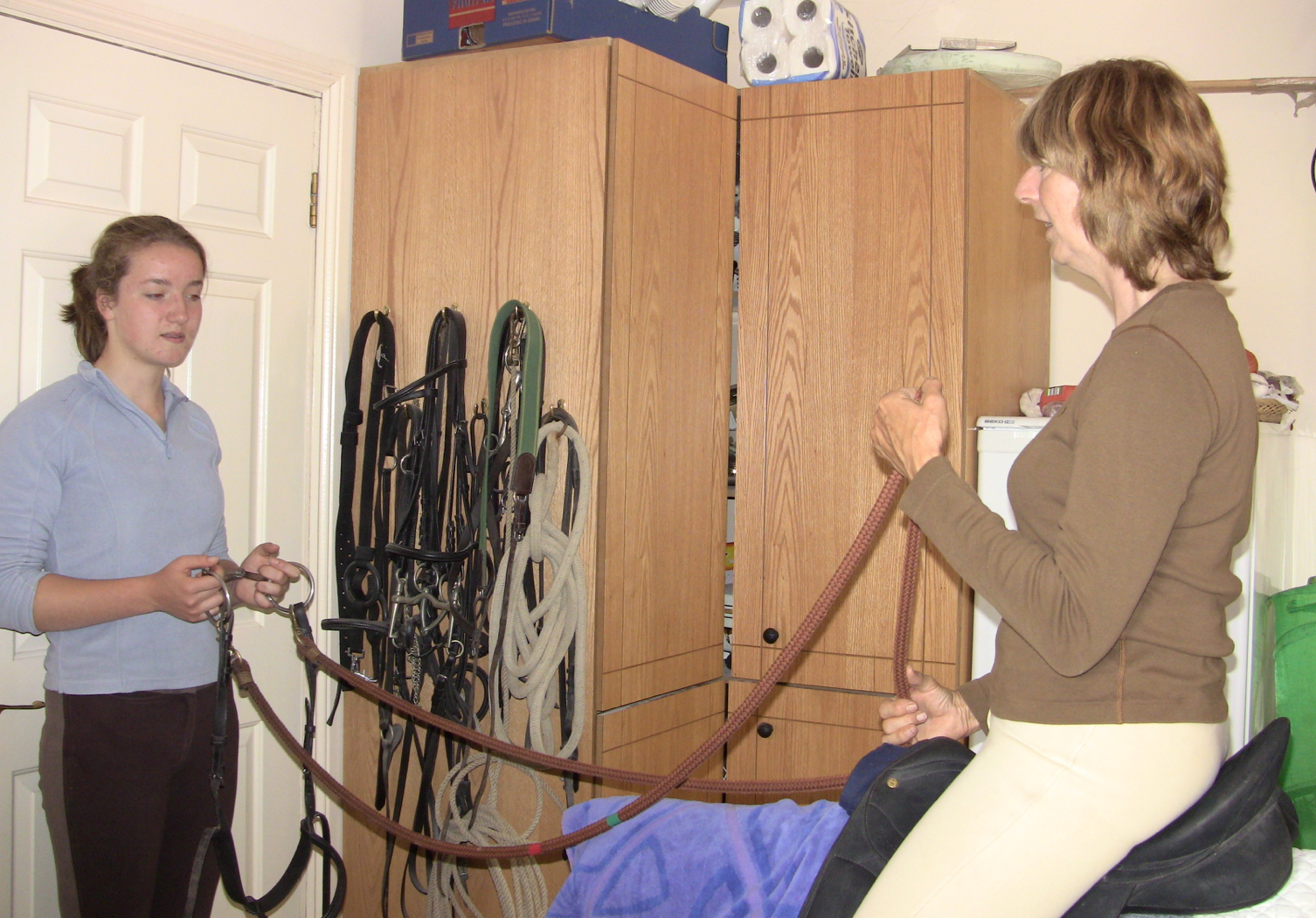
There are two types of skills you need to build: the first are technical skills you need to be able to handle a horse, these include rope handling and other physical skills.  The second involves the split second decisions you must make.
Merenaro 2014-11-03 at 8.17.32 PMmerenaro spook 2014-11-08 at 9.19.48 AMmerenaro spook 2014-11-08 at 9.20.16 AMmerenaro spook 2014-11-08 at 9.20.35 AM
Building Skilled Responses To The Unexpected
To illustrate how the decision-making skill can be developed to a state of excellence Coyle looked at how Brazil’s soccer stars develop their lightning fast footwork.  Brazil became the country to beat in world-class soccer not because their players were genetically more gifted, but because Brazil’s young players grow up playing a game called Futsal.

Futsal is played in a much smaller court than regular soccer.  It “compresses soccer’s essential skills into a small box; it places players inside the deep practice zone, making and correcting errors, constantly generating solutions to vivid problems.”

In futsal players touch the ball 600 percent more than they do in regular soccer.  600%.

Of course, the young Brazilian players learn faster, and develop sharper ball handling skills than their American counterparts who grow up playing on full size soccer fields.

I had never watched futsal before, so I looked it up on youtube.  I was astonished.  It was like watching the Harlem Globe Trotters but with the players teasing their opponents with a soccer ball instead of a basketball.  Or imagine watching Fred Astaire or Gene Kelly dancing while keeping a ball in motion between their feet.  It was astonishing the skill these players had.  If you haven’t seen futsal, here’s a quick link: https://www.youtube.com/watch?v=4LG_zukvek0

Horse Simulators
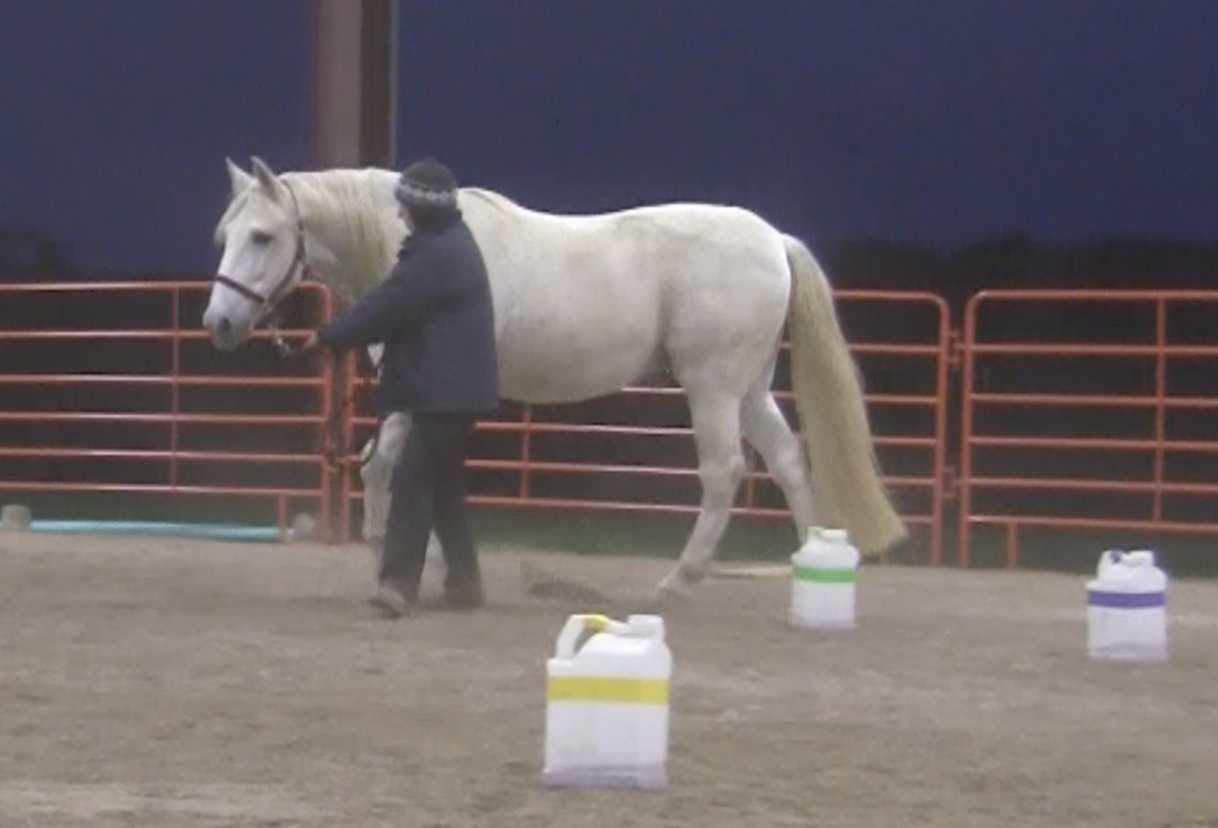
How is all this fancy footwork relevant to horse training?  In our “horse simulator” exercises I can let someone experience a horse who is spooking or pulling on a lead over and over again.  It’s like the futsal court that lets the player practice his ball handling skills many more times than he would on a regular-sized field.

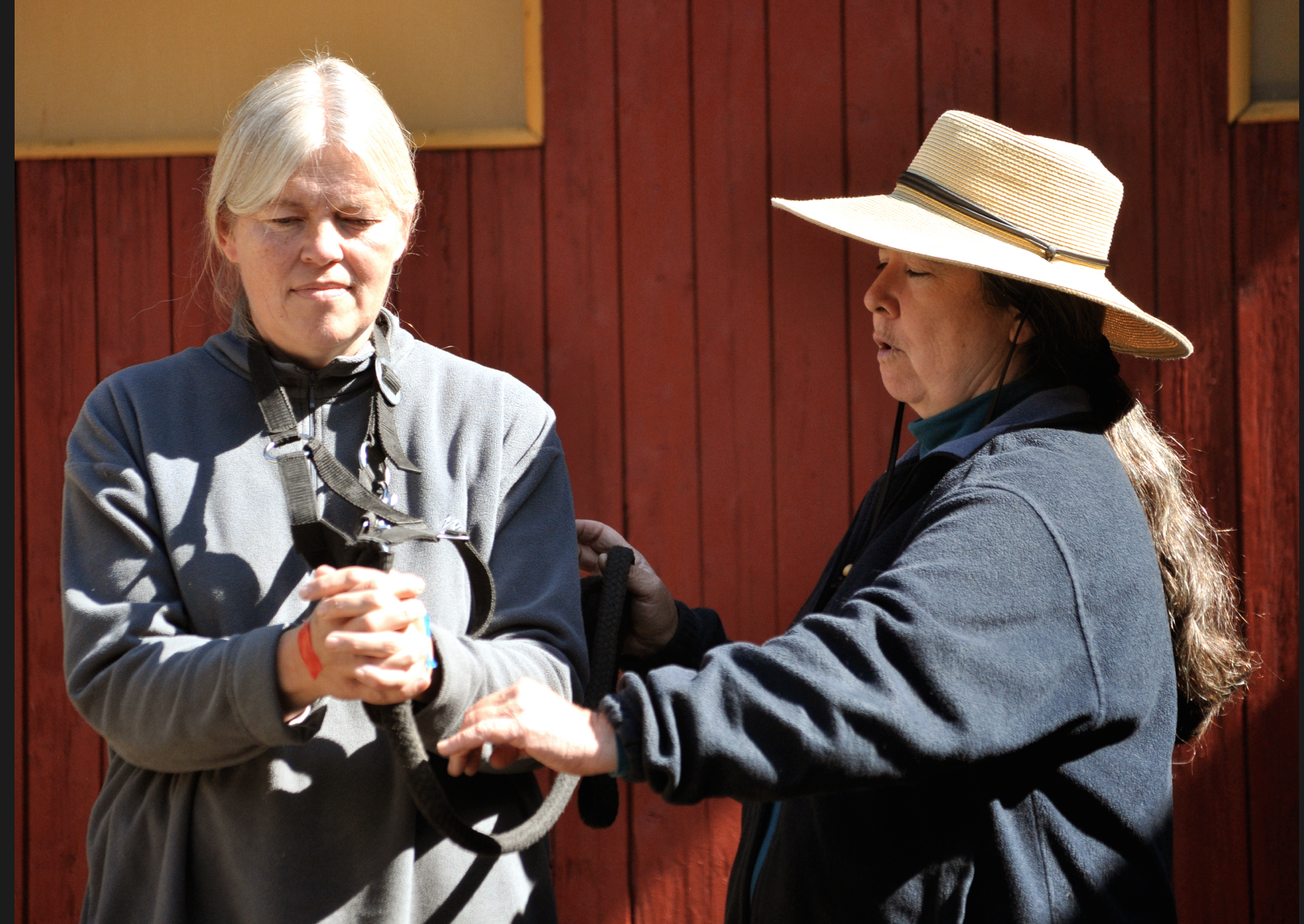
I’m good at copying what horses do.  I know what it feels like to have a horse leaning in on me, or trying to scoot away.  I’m good at “being a horse”.  I can slow the movement down, make it less abrupt or less forceful so a new learner isn’t as overwhelmed as they be by their actual horse.  I can fall into their space and see how they respond down the lead.  That was too slow, try again.  Better.  Try again.  Now what happens if I make a slight change?

Our “horse simulator” practice is comparable to futsal.  The handler gets in many more practice rounds so she is better prepared for the real thing.  We’re improving her underlying technique and sharpening all the quick decision making that has to occur as she partners her horse.

Accelerated Learning
Translate this type of deep practice to horses and see what you get.  Now simple reaction patterns are repeated many more times than they would be in a more conventional approach to training. That describes very much what we do in clicker training.  We often marvel at the accelerated pace of learning in our clicker-trained horses.  But is it any wonder?  From the outside looking in people see training that is made up of interrupted flow.  I don’t put video up on youtube of riding training sessions because I know people won’t understand what they are seeing. The horse is constantly stopping.  How can that possibly be right?  I know that’s what they are thinking.

The myelin model of skill building explains why this is more than right.  It is the road to excellence.

I’ve used this example many times.  Suppose you are teaching a young horse to pick up the canter under saddle.  In normal training you would get the canter and then insist that the horse keep going.

In clicker training, as the horse transitions into the canter, click, within a stride or two he would be stopping to get his treat.

How is he ever going to learn to canter with all these stop and go interruptions?

The answer comes when we project out what happens over the course of this training session and the next ten.  The first horse will be made to stay in the canter for longer and longer duration.  Over the course of his training session let’s say that he does five transitions.  That number will actually be going down as the rider builds duration in the canter, but let’s say the rider keeps track and asks for five canter departs in each ride.  Repeat that for ten days and this horse will have done fifty transitions into the canter.  That sounds like a lot, but let’s see what happens with the clicker-trained horse.

In that first ride the horse picks up a canter and gets clicked before he’s gone more than a stride or two.  He gets his treat and the rider is immediately asking for another set up into the canter.  It’s quite possible that in the same span of time that the other team worked, this horse could do twenty or thirty canter departs.  So over the next ten days instead of doing 50 departs, he’ll be doing 200.  That’s a huge difference.

So now we can ask the question: which horse is going to understand canter departs better?  Or if we ask this from the perspective of myelin and skill development – which horse is going to have the better insulated myelin?  Which horse is going to pick up the canter faster, with better balance, without seeming to think about it?  It’s an easy answer.  The clicker-trained horse.

With people the myelin model makes us rethink what it means to be a prodigy.  More and more researchers are understanding that long-term success grows out of deep practice, not some innate talent.  Hmm.  No wonder we have so many clicker trainers with their “common” backyard horses doing amazing work. Yes, it is wonderful to have a “fancy” horse whose parents have won all sorts of trophies and honors, but that natural athleticism is meaningless unless it is paired with a style of training that can develop the horse’s talent.

Coming Soon: Part 5: Skill Depends Upon Myelin
In Search of Excellence: Effective Practice

Part 3: Equine Simulators

This is the third installment in a nine part article.  If you have not yet read Parts 1 and 2, you should begin with those.  Part 1 was published on Nov. 16, 2014.

Part 1: “The Talent Code”:
Part 1 introduces Daniel Coyle’s book, “The Talent Code”.

Part 2: The Myelin Factor:
This section presents a short course in neuroscience centered around myelin and the role it plays in building new skills.

Part 3: Equine Simulators:
Part 3 looks at creative ways to build your handling skills BEFORE you work directly with your horse.

Ruth Alex deep practice lead handling Mary C Aoiffe Helen House horse
Part 3: Equine Simulators
How do you learn to ride and to train horses when mistakes can result in serious accidents?  You create simulations. These days there are mechanical simulators.  I’ve sat on a few of them, and the good ones really do feel as though you are riding a horse.  You can spare school horses a lot of miles carrying unbalanced riders through the use of these machines, but that’s not the kind of simulator I am referring to here.  The kind that I’m talking about don’t require any special equipment.  In fact at first they don’t require any equipment at all. That’s another thing we have in common with these talent hotspots – the training doesn’t rely on expensive, specialized equipment.  Anyone can have access to these methods.  That means anyone with the passion to pursue excellence can succeed.  You don’t need to have a fancy horse or fancy stable.  You just have to have the desire to do better.

In clinics we put the horses away while the people work on their handling skills.  Instead of making their mistakes with their horses, we use each other as the “equine simulators”.  I’m sure people who are new to my work must at first be somewhat baffled.  They’ve come to the clinic expecting to see horses being trained.  Instead they are going through a series of t’ai chi warm-up exercises.  What has this got to do with horse training?

It turns out everything.  I’m taking them through a multi-step process that Daniel Coyle would recognize as deep practice.  To learn more about training plans and learning theory we play PORTL (Portable Operant Research and Teaching Lab) and other training games.  To learn better technique, first, we set aside lead ropes and all other equipment so people can become more tuned in to their own balance.  We explore balance through a series of questions: How do you move? What is connected? Where does a movement begin?  Where does it stop?  Movement is slowed down so it can be broken down into tiny weight shifts.  We are building skills myelin layer by myelin layer.

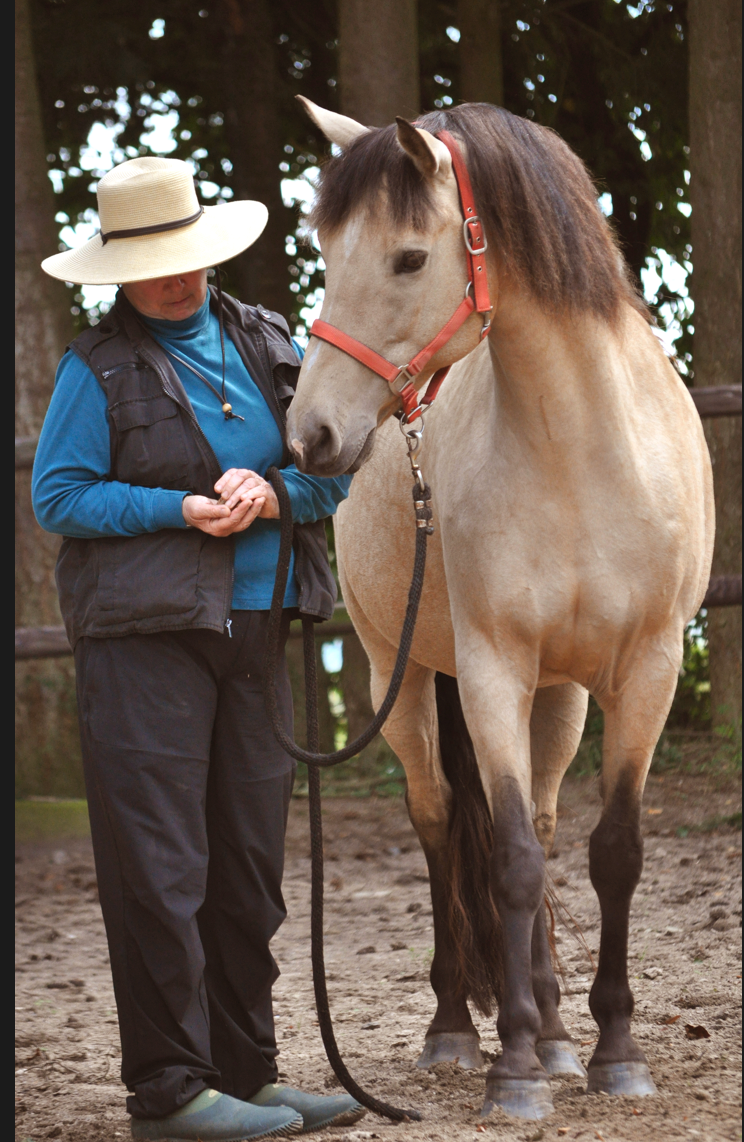
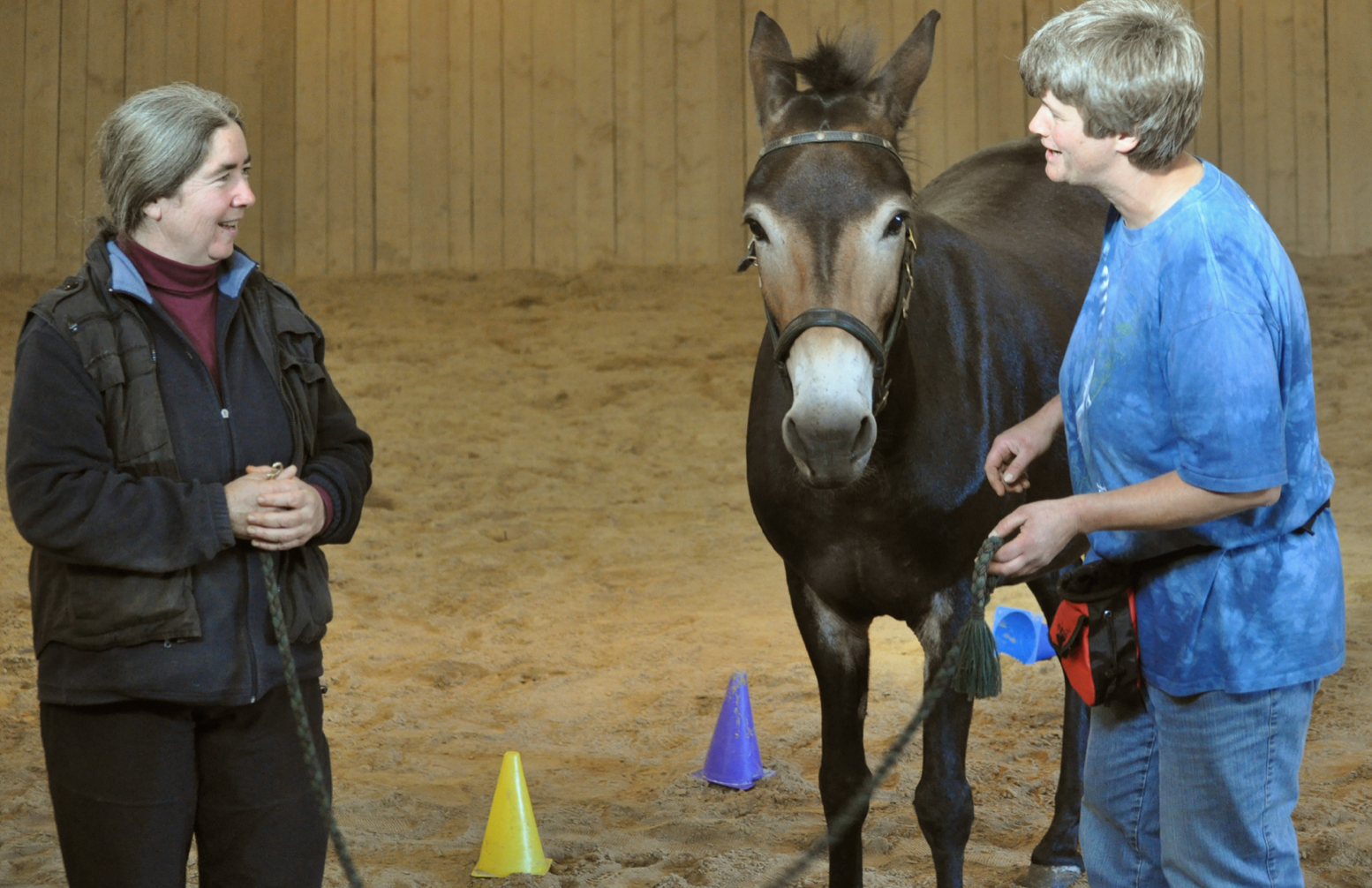
Next we practice with one another.  One person holds the horse’s end of the lead while another explores her handling skills.  How does the lead feel to the “horse”.  This is the time to make “mistakes”, to experience what it feels like to the horse when someone is too tight, or too quick, or so soft they are absent.  What happens if the “horse” leans into the handler, or spooks suddenly?  What response does the handler make?  Over and over we can repeat patterns, until responding to a horse’s sudden movement becomes second nature. That’s what we want.  With the “equine simulators” you can test out your technique before it’s the real thing.  The “simulators”  give you a safe way to develop your skills. Clumsy handling doesn’t just frustrate your horse, it can get you hurt.  Practicing beforehand means you can be more successful the first time out.

I liked reading in the “Talent Code” that this somewhat unconventional approach to training would seem very familiar to the coaches in : Coyle’s talent hotbeds.  We’re building two types of skills through these exercises.  The first is the technical skill – the details of communicating clear messages to your horse via body language and leads.  The other skill involves all the quick decisions you have to make when handling a horse.  We’re building the ability to make those quick decisions and to respond effectively to the unexpected.

Coming soon: Part 4: “What Does Soccer Have To Do With Horse Training?”

In Search of Excellence: Effective Practice – Part 2

Part 2: Deep Practice

This is the second installment in a nine part article.  If you have not yet read Part 1, you should begin with that:

Part 1: “The Talent Code”:
Part 1 introduces Daniel Coyle’s book, “The Talent Code”.

Part 2: The Myelin Factor:
This section presents a short course in neuroscience centered around myelin and the role it plays in building new skills.

Counting Treats with a very interested audience

A very interested observer

Deep Practice
Here’s how Coyle describes deep practice:

“When I started visiting talent hotbeds, I expected to be dazzled.  I expected to witness world-class speed, power, and grace.  Those expectations were met and exceeded – about half of the time. But that was only half of the time.  The other half I witnessed something very different: moments of slow, fitful struggle.  It was as if a herd of deer suddenly encountered a hillside coated with ice.  They slammed to a halt; they stopped, looked, and thought carefully before taking each step.  Making progress became a matter of small failures, a rhythmic pattern of botches. . . . The talent hotbeds are engaged in an activity that seems, on the face of it, strange and surprising.  They are seeking out the slippery hills.  They are purposely operating at the edges of their ability, so they will make mistakes, and somehow making mistakes is making them better.”

The question Coyle wanted to understand was how?

“Deep practice is built on a paradox: struggling in certain targeted ways – operating at the edges of your ability, where you make mistakes – makes you smarter. Or to put it a different way, experiences where you are forced to slow down, make errors, and correct them – as you would if you were walking up an ice-covered hill, slipping and stumbling as you go – end up making you swift and graceful without your realizing it.”

Most of us would read this and want to run the opposite way.  Struggle.  Mistakes.  That’s not how we want to learn.     And it certainly doesn’t sound like clicker training where we work hard to avoid putting our animals through frustrating learning experiences.  Is there a contradiction here?  It turns out that the deep practice techniques Coyle described actually fit beautifully into a clicker training framework.

The Sweet Spot
We may want to learn without struggle, but according to the researchers who are discovering how myelin works – it’s a terrible way to learn if you really want to become good at something.  Coyle quoted Robert Bjork, chair of psychology at UCLA:

“We tend to think of our memory as a tape recorder, but that’s wrong.  It’s a living structure, a scaffold of nearly infinite size. The more we generate impulses, encountering and overcoming difficulties, the more scaffolding we build.  The more scaffolding we build, the faster we learn.”

The key to deep practice is picking a goal that is just beyond your present abilities and targeting your efforts towards achieving that goal.  Or as Bjork put it:

“It’s all about finding the sweet spot.  There’s an optimal gap between what you know and what you’re trying to do.  When you find that sweet spot, learning takes off.”

That sounds like a good training plan.  The sweet spot is the puzzle we set.  Find the answer, and, click, you get a treat.  If the puzzle is too easy, the learner won’t progress.  If the puzzle is too hard the learner will get frustrated and quit.  The sweet spot stretches the learner just enough so he is always reaching for the next small increment of success.

Coyle summarized the discussion of myelin and deep practice with this:

“Deep practice is a strange concept for two reasons.  The first is that it cuts against our intuition about talent.  Our intuition tells us that practice relates to talent in the same way that a whetstone relates to a knife: it’s vital but useless without a solid blade of so-called natural ability.  Deep practice raises an intriguing possibility: that practice might be the way to forge the blade itself.

The second reason deep practice is a strange concept is that it takes events that we normally strive to avoid – namely, mistakes – and turns them into skills.  To understand how deep practice works, it’s first useful to consider the unexpected but crucial importance of errors to the learning process.”

And then he asked what to me was a key question where horses are involved: “How do you get good at something when making a mistake has a decent chance of killing you?”

Coyle used as his example the high death rate for pilots in the early days of aviation.  How do you learn to fly when mistakes can be fatal?  The answer was you develop simulators.

“The Air Corps pilots who trained in the first simulators were no braver or smarter than the ones who crashed.  They simply had the opportunity to practice more deeply.”

Coming Soon – Part 3: Equine Simulators

In Search of Excellence: Effective Practice

In Search of Excellence: Effective Practice
By Alexandra Kurland
written October 2014

I wrote this article originally for my on-line clicker training course.  It’s a thirty page article so for this blog I have broken it up into 9 parts.  

Part 1: “The Talent Code”

This is the first installment in a nine part article
Part 1 introduces Daniel Coyle’s book, “The Talent Code”.

Clinic Fun: Let the Equines Watch While the Humans Learn

Discovering Why Things Work
I love finding books that agree with me!  Who doesn’t.  It’s good to get outside confirmation that you are very much on the right track, especially when the track you are on is one you are pioneering. The horses tell us when we’ve chosen well, but they can’t always explain why something is working.  That’s been the case with many elements in my work.  I often know something works before I have figured out why.  For example: we know the click in clicker training is powerful.  Jaak Panksepp helped us to understand why.  The puzzle solving nature of clicker training sparks the SEEKER system, one of seven core emotional systems he has identified.

Another example are the bone rotations.  The horses told me that they worked, but I needed a t’ai chi specialist to help me understand why and to spot the universality of bone rotations in so much of horse handling.  Even something as basic as how you deliver treats has a bone rotation embedded in it.  When you discover the rotation and include it in your food delivery techniques, your horse has a much better shot at developing good treat taking manners.

The horses could tell me that letting them take a nap while the humans practiced their rope handling skills was a good thing.  That seems obvious enough.  Working out what you are going to do before you apply it to the horses makes sense.  After reading Daniel Coyle’s “The Talent Code”, I now have a much deeper understanding of why.  I also have an even greater appreciation for the teaching process that I have been developing over the last twenty odd years.

The Talent Code
One of the long held beliefs of our society is that some people are simply born more talented than others.  Pick a great sports star.  We believe that person was born with the talent that let him run faster, jump higher.  Or pick a world class musician or dancer.  Those individuals have some innate talent that lets them play a violin better than anyone else, or dance more beautifully.  Yes, they had to learn their art. They had to practice – but there was some special, innate gift that set them apart from all the others who were learning and practicing. Or was there?

Certainly genes are a factor.  If your genes are coded for five feet not seven, it will be hard to become the next world class basketball star, but there are plenty of seven foot players who never make it to greatness.  What is the difference between them and the people whose names we know?

Daniel Coyle’s book, “The Talent Code”, provides answers to this question.  Coyle would say it comes down to three elements which he calls: deep practice, ignition and master coaching.  All three come together to build skills.  In his book Coyle described what he referred to as talent hotspots: training centers that have produced an exceptionally large number of superstars.  He described a tennis camp in Russia that has produced many of the world’s top players.  Students don’t spend their training time out on a court hitting balls.   Instead they are lined up in rows, like so many ballet dancers, practicing their swing – without rackets, without balls.  He described a music camp not far from where I live that ranks among its alumni Yo Yo Ma and Isaak Perlman.  Students there practice music so slowly that it becomes unrecognizable.  Familiar pieces sound more like the drawn out notes of a whale song than anything you would hear in a concert hall.

These practices grabbed my attention.  They were so familiar.  This is how I teach.  Like the tennis players who learn their technique first without a racket in hand, I have people learn their handling skills while their horses take a nap in their stalls.  And like the music students who slow down their music to reveal every note, we slow movement down to reveal every weight shift. I have been developing these teaching techniques over thirty years of teaching.  I know they work.  I see it in the elegant dance that emerges between horse and handler as their skills are perfected.  Now Coyle’s book has helped me to understand better why this approach works so well

It turns out that talent isn’t something you are born with.  It’s something you build.

Coming Soon: Part 2: The Myelin Factor

Five Went To Sea and Had a Great Adventure!

Five Go To Sea

Kay Laurence has just announced that registration is now open for the 2015 Five Go To Sea Conference Cruise. This time we’ll be sailing to Alaska. Visit FiveGoToSea.com for more information on next year’s cruise.

After our Caribbean adventure in April of 2014 I wrote a series of posts for my on-line course detailing some of the presentations.  I’ll share some of the cruise gems here, beginning with a description of the ship and the overall cruise experience.

Five Went To Sea and Had a Great Adventure!

I’m back from the Five Go To Sea conference/cruise/adventure.  I’m not sure what to call it.  I think I’ll just settle for amazing!  That describes it the best.

I’m not sure where to begin or what to include in this report.  Going into the cruise I didn’t know what to expect.  I knew cruise ships were enormous, but the Celebrity ship we were on dwarfed anything I had imagined.  I looked up its dimensions.  It’s 127 feet wide and 1047 feet long.  Some people think in terms of football fields.  I translate dimensions into riding arenas.  The ship is twice the width of my indoor arena and more than eight times as long!  Now take those dimensions and stack up 14 floors of guest accommodations, restaurants, theaters, pools, meeting rooms, dance floors, lounges, spas and all the other amenities a cruise ship has to offer, and you’ll begin to get a sense of the size of the ship.  And however big it is from the ground floor up, there’s that much again below to accommodate the crew, kitchens, engines, fuel, water, food storage and everything else that it takes to provide for well over 4,000 people.  My barn looks like a big building sitting by itself on the side of a hill, but it would be easily swallowed up inside the belly of the Reflection.

I know heading into the cruise many people were concerned about being seasick. I can now tell you that yes, you do feel the pitch and roll of the ocean.  Were people sea sick?  On the first day some people were definitely feeling a bit queasy.  The experienced travelers like Ken Ramirez had taken precautions and were wearing motion sickness patches.

What did I experience? I can now say that I loved being out on the open ocean.  Was the rolling of the ship fun?  Absolutely! I loved it!  It felt like riding!  I might have a different tale to tell if we’d been crossing the north Atlantic in a winter gale, but I loved the rolling of the ship.  When you ride, you let the motion of the horse take you.  It’s not about blocking or keeping yourself rigid.  You let your joints follow the forward and up of the horse’s back. The ship was like that.

There’s an exercise I teach called the “four points on the bottom of your feet”.  It’s a Feldenkrais exercise.  You begin by noticing how you move, how you shift your balance as you roll around the four points on the bottom of your feet (inside toe, outside toe, outside heel, inside heel).  How do you shift your balance forward and back, side to side?  How do you send and receive these shifts in balance?

On the first day of the conference I gave a talk that I titled “Questions”.  It was an amalgam of several other talks I’ve given this year.  It included several short video clips that sum up beautifully how I work with horses.  It began with a clip from Mia Segal, a Feldenkrais practitioner.  In it she talks about how she asks questions through her hands.  When she’s working with someone, she doesn’t provide the answers.  She doesn’t tell the person what to do – bend your knees, turn your head this way or that.  Instead she asks questions – how does this feel under my hands?  Where does the movement begin?  Where does it stop?  How does it stop?

In the “Four Points” exercise you are asking those questions of yourself.  Where does the movement begin?  Where does it stop? What blocks it?  What could I release, what could I find that would let me flow more easily around the four points on the bottom of my feet?

The roll of the ship let me explore those questions.  I loved the feel.  The ship would pitch to the side and I would roll with it, catching my balance at the top of the swell and rolling down with it.  I kept thinking how boring it was going to be to be back on land that didn’t roll and sway under my feet.  I loved “riding” the ship.

I suspect the people who were feeling a little “green around the gills” were wishing I would stop grinning like a Cheshire cat each time the ship pitched up over a wave.  There’s nothing so annoying as someone who is having a good time when you’re feeling miserable – especially when what is making you feel sick is the very thing they are laughing about.

I do think it is a great example of we create our own reality.  I went into the cruise expecting to have a great adventure.  I could have stiffened against the pitch of the ship and made myself miserably sick.  Instead I flowed with it and had a grand time “riding”.

I love exploring balance.  On that first day at sea I had a hard time staying balanced.  I could roll around the four points just fine, but I couldn’t stand with my feet together.  I had to keep stepping out wider to catch my balance. There was also no walking a straight line down the endlessly long corridors back to my room.  I swayed from wall to wall looking like I’d just downed a bottle of Caribbean rum.   But a couple of days later, not only could I stand feet together, so could everyone else.  I led the group through the beginning steps of learning to stand balanced over your feet.  On day one this would have been a challenge for all of us.  But on day three of the conference everyone had gained sea legs.

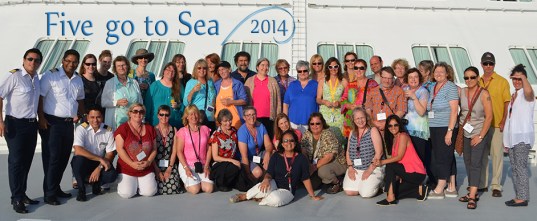
We do create our own reality.  Kay Laurence discovered she likes cruises, so she created this conference cruise to celebrate her 60th birthday.  I’m very glad she did and that she included me as one of the presenters.  It was such good fun, and such a great conference.

Unlike other conferences we didn’t have a set agenda with program titles announced ahead of time.  Instead each of us managed one of the four conference days.  We set the days up in a way that suited our style of teaching.  Every day included formal presentations, but there was also time for questions and discussions.  We each had talks that the others had given that we wanted to hear again.  On the day I managed, I told Jesús I was going to put him to work.  I wanted to hear his talks on resurgence and negative reinforcement again.

I’m not even going to try in this one report to go through all the programs that were presented.  That would make it one of those impossibly long posts that everyone wants to read, but no one really has the time to.  Instead over the coming days I’ll given you some of the “Five Go To Sea” gems, some of the highlights of the presentations, discussions and adventures.

I will just share this.  Going into the cruise the four of us weren’t sure what we were getting ourselves into.  Would a conference work on a cruise ship?  Would the four of us work well together as presenters?  Was it something we felt was productive and worth doing?

On the sixth night of the cruise Kay, Ken, Jesús, and I had dinner together.  Kay asked the question – should we do it again?  The answer was an unhesitating and unanimous “yes”.  We each voiced the same thing.  We would feel very sad if we thought this was the only time we would have a conference like this.  So start practicing the “four points on the bottom of your feet”.  We are planning another “Five Go To Sea” adventure for August 2015.  This time the cruise will take us up the Alaska coastline through some spectacular scenery.  Kay has just announced that the registration is open.  Visit FiveGoToSea.com for details, and come be one of the Five going to Sea in 2015!

Alexandra Kurland
theclickercenter.com

aftercruise1-2