Modern Horse Training: My horse is so SMART!!!!”

I always love seeing the posts that begin with this enthusiastic discovery. Someone has given clicker training a try and discovered how smart their horse really is.

I’ve heard the opposite said all too many times. “Horses are such stupid animals.” This is often followed by: “That’s why you need to use force to train them. But don’t worry. They don’t feel pain the way we do.” Go to any tack store in the country and you will see evidence of this very old-fashioned way in which people view horses.

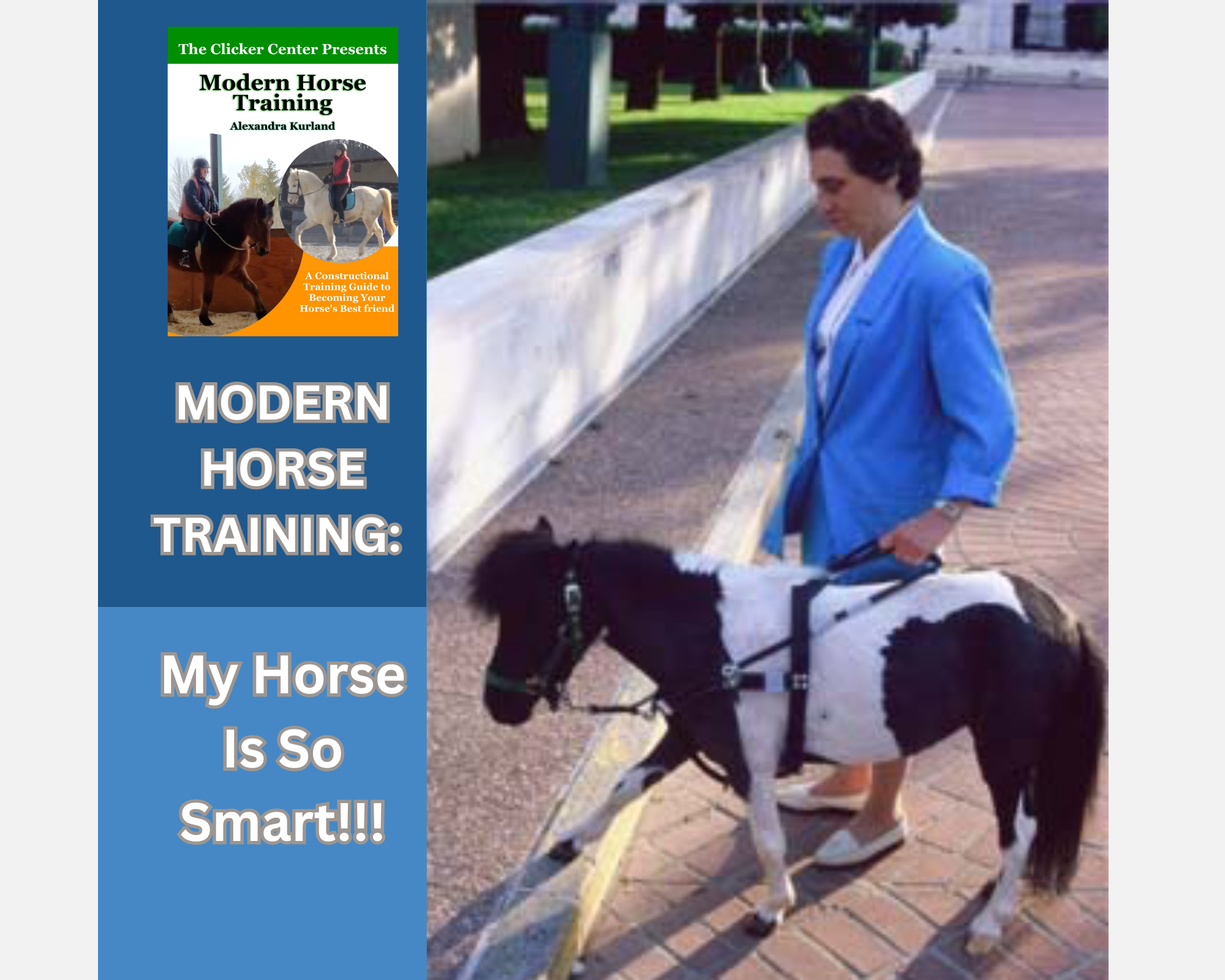
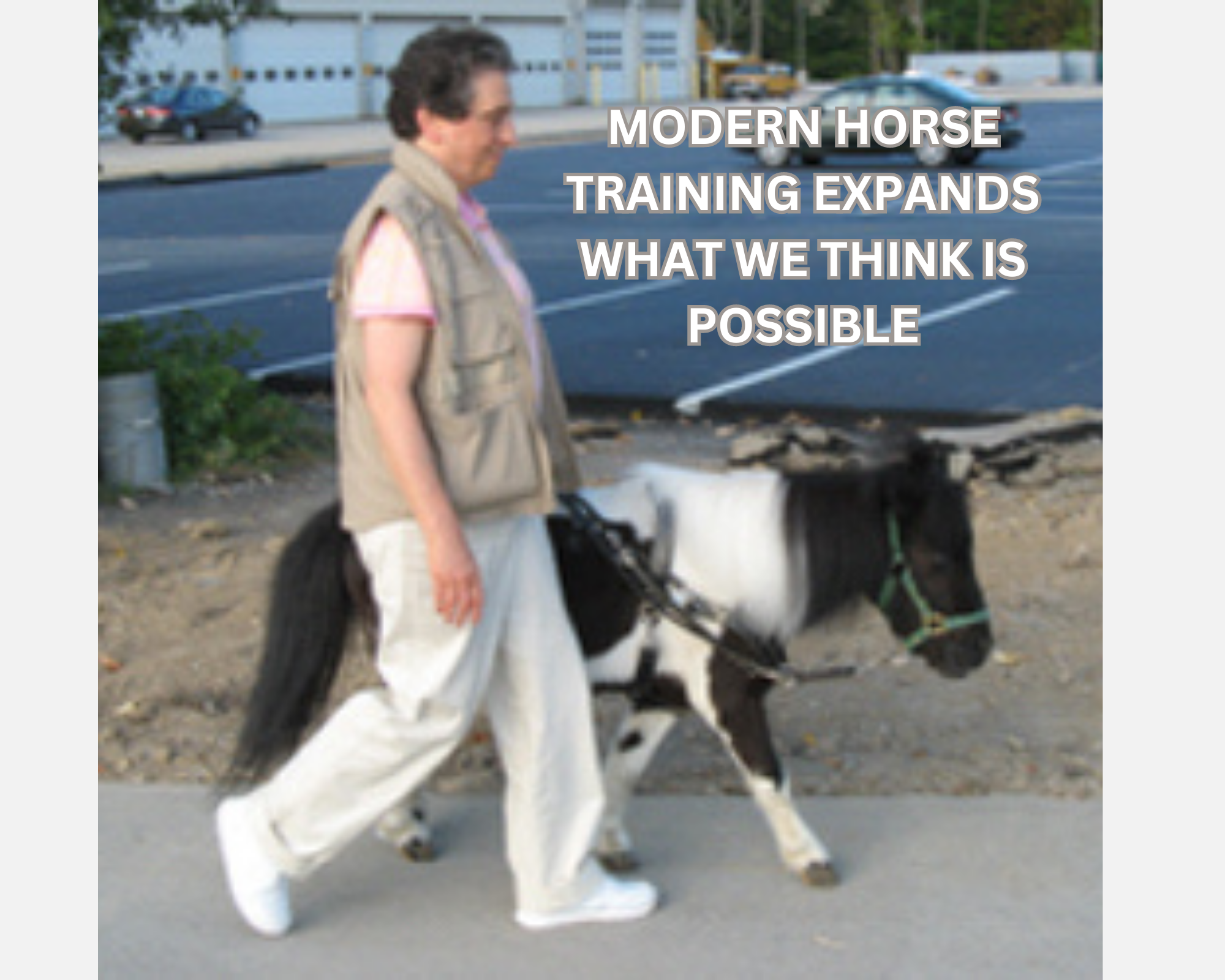
One of the reasons I wanted to train Panda was to help people see horses in a different light. I’ve heard people talk about guide dogs in such glowing terms. “Isn’t that wonderful! That dog is so smart.”

When we started with Panda, many horse people believed a horse could never be trained to guide. They simply weren’t smart enough. And yet here Panda is, twenty years on, still guiding! Horses are indeed so very smart!

Modern Horse Training: My Horse Is So Brave!

Panda is guiding her blind owner through a construction zone. This was their daily walk home from work. Every day there was a different puzzle to figure out. One day there would be a sidewalk that ended in construction fencing. The next day the entire sidewalk would be gone and Panda would have to find a path forward through the construction zone. She was always unflappable.

Panda’s good decisions were reinforced by her handler. Together they developed into a confident team. Twenty years on and they are still a great team. Modern Horse Training is for the long haul.

If you want to see a short video clip of Panda guiding, visit my instagram posts at #Alexandra.Kurland.5

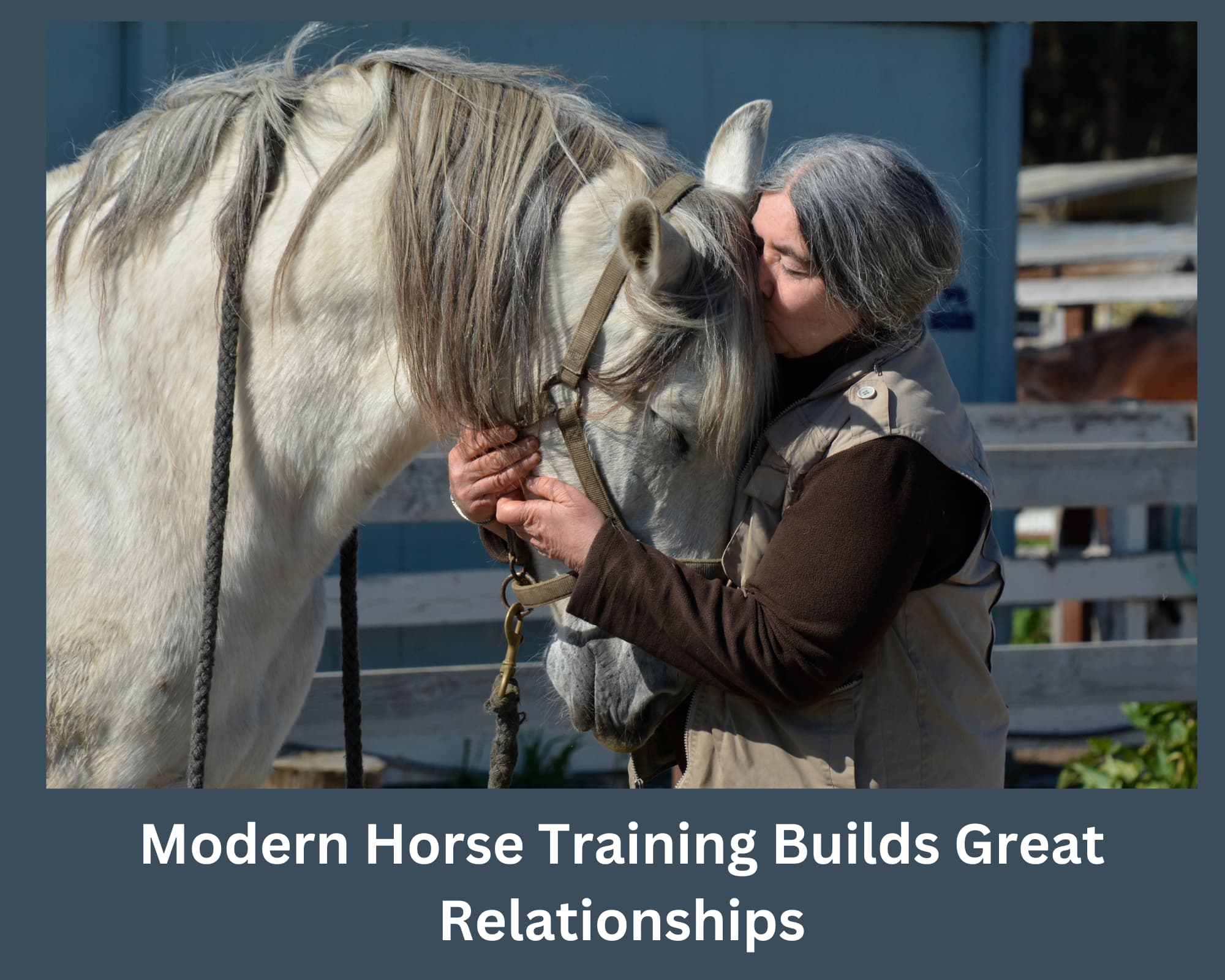
Modern Horse Training Builds Great Relationships.

This is Panda, the mini I trained to be a guide for her blind owner.

Ann is a fiendishly good scrabble player. While she was teaching me the basics of the game, Panda had my back. She provided lots of physical and moral support. And yes – she is housebroken, just like a dog.

One of the great things about training is it creates more freedom for the individual. A horse who is easy to handle gets to go more places. It’s a lot more fun to go on a trail ride with a horse who enjoys the adventure rather than one who just wants to go home.

You might not want to bring your horse into your house. For Panda it is part of her job. And because she is house broken, time inside means more social time with her human “herd”.

This is one of my favorite photos of Panda, the mini I trained to be a guide for her blind handler. I have many more “dramatic” images showing Panda successfully negotiating challenging environments. In fact on this walk they have just gone through a construction zone in which all the sidewalks were torn up and Panda had to find a safe way past bulldozers and other construction equipment. I may share some of those images, but this is my favorite because it shows such harmony between Panda and Ann. There’s no tension in either of them. Panda guides without pulling so there’s no strain on either her body or Ann’s.

Balance and the clear communication this photo represents is a central pillar of Modern Horse Training.

June marks the 20th Anniversary of Panda going into full work as her guide. Panda still loves her job. Think about that. How many people can say that after twenty years they still love going to work. Panda can!

To learn more visit my web site: theclickercenter.com

Instagram: alexandra.kurland.5
Podcast: equiosity.com

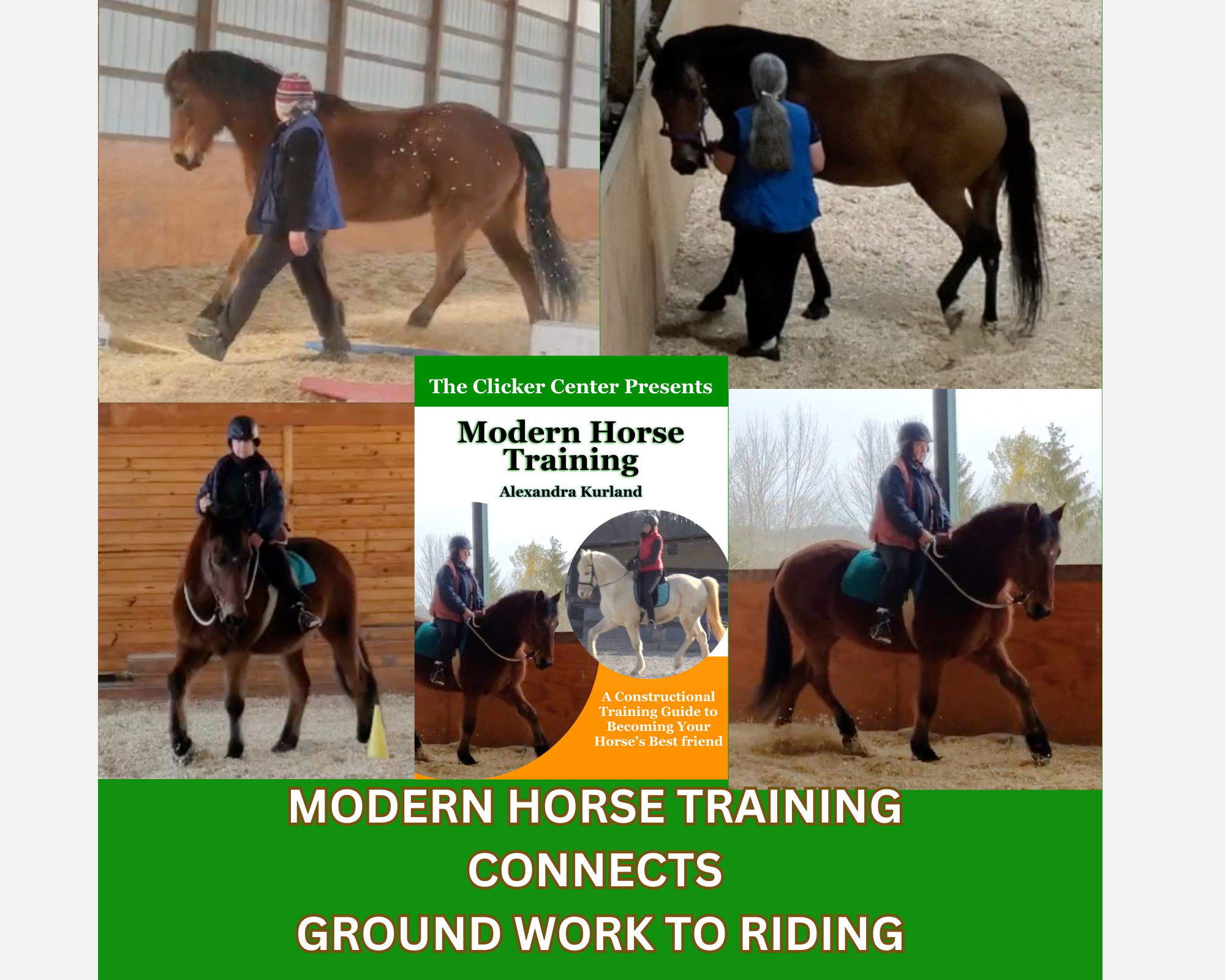
Modern Horse Training Connects Ground Work to Riding

One of my favorite expressions is: “Ground work is riding where you get to stand up and riding is ground work where you get to sit down.”

Everything is connected. The beautiful balance that Robin shows as he trots beside me at liberty is the same balance that I want to ride. The cues that I use on the ground carry over and become cues he understands when I ride.

The use of the lead as a communication tool works in the same way as the reins. When I teach Robin how to respond to tactile cues beginning on the ground, that understanding carries over to riding. Leads and reins work in the same way. Body language cues taught first on the ground carry over into riding.

This means the training is wonderfully efficient. I don’t have to teach one set of cues and behaviors for ground work and an entirely new set for riding. The components that I use to work with Robin at liberty are the same components that I’ll use for work in-hand and for riding. Modern Horse Training makes a deliberate, thoughtful connection between everything you teach. Lessons are not separate and random. The more your horse knows, the faster he will learn because many of the components you’ll need for a new lesson will already be in place.

Modern Horse Training Focuses on Balance

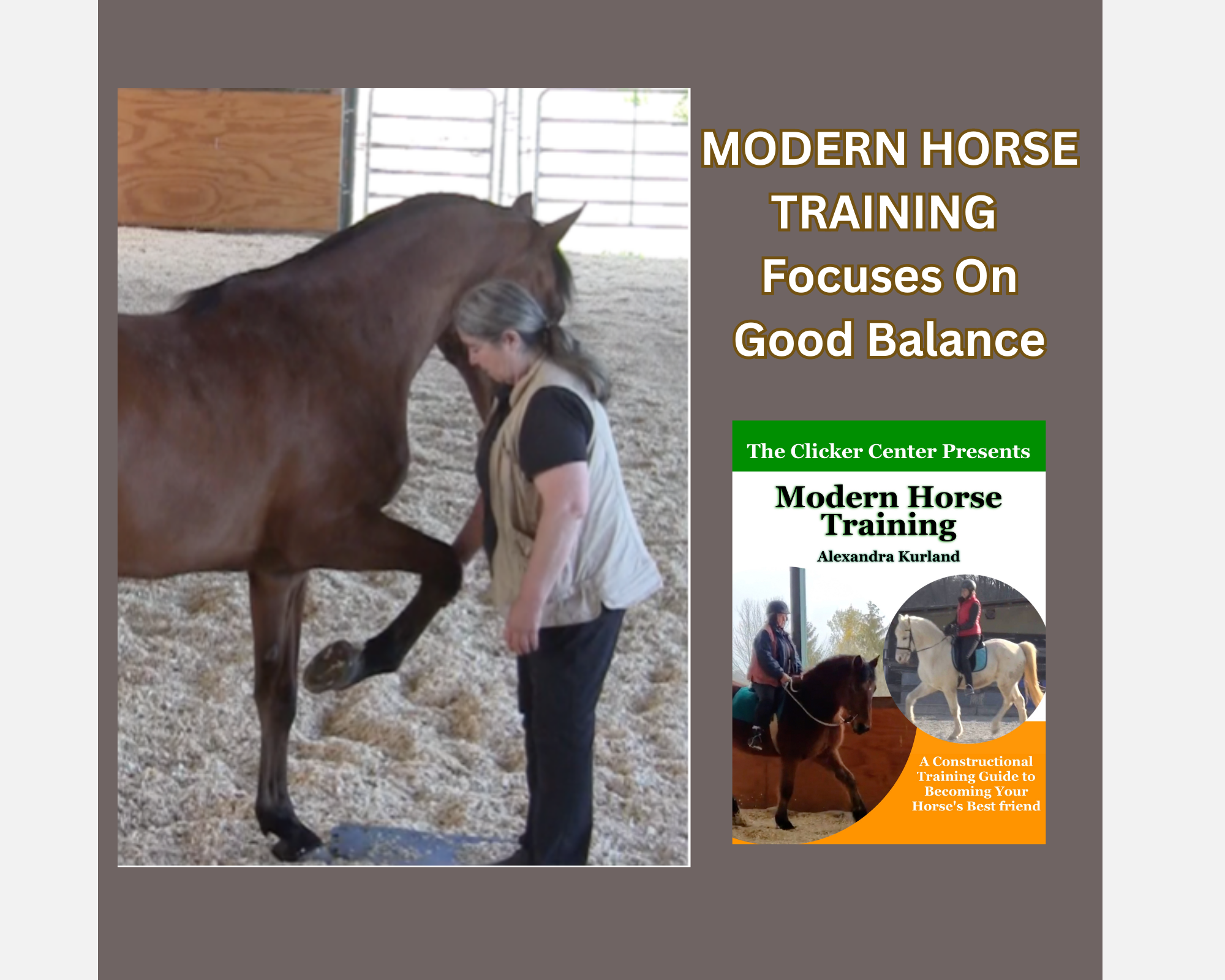
This has long been a favorite photo. I am asking Robin to lift his knee into my waiting hand. I love the quiet elegance that is expressed in this gesture. Note the solid support we see in his left front as he lifts his right leg.

I could easily turn this into foot cleaning, or I could expand the gesture so he extends his leg forward in preparation for Spanish Walk.

Or I could use it, as I am here, as a gymnastic exercise that prepares Robin for the day’s ride.

Once again we see the foundation lessons in action. Robin is standing on a mat. The mat provides a context for the leg lifts and helps to keep them from becoming a nuisance behavior. His beautiful balance has evolved out of the foundation lessons.

Modern Horse Training reminds us that everything is connected.

To learn more visit my web site: theclickercenter.com
Instagram: alexandra.kurland.5
Podcast: equiosity.com

Modern Horse Training Builds Great Relationships

I love giving clinics. I love sharing clicker training with others, and I am always honored when someone lets me have a play with their horse. Over time I have come to know many of the clinic horses well, and I consider them to be part of my extended equine family. I always get a chuckle when a horse I haven’t seen for months gets excited when I turn up at the barn. “You’re here! We’re going to play!”

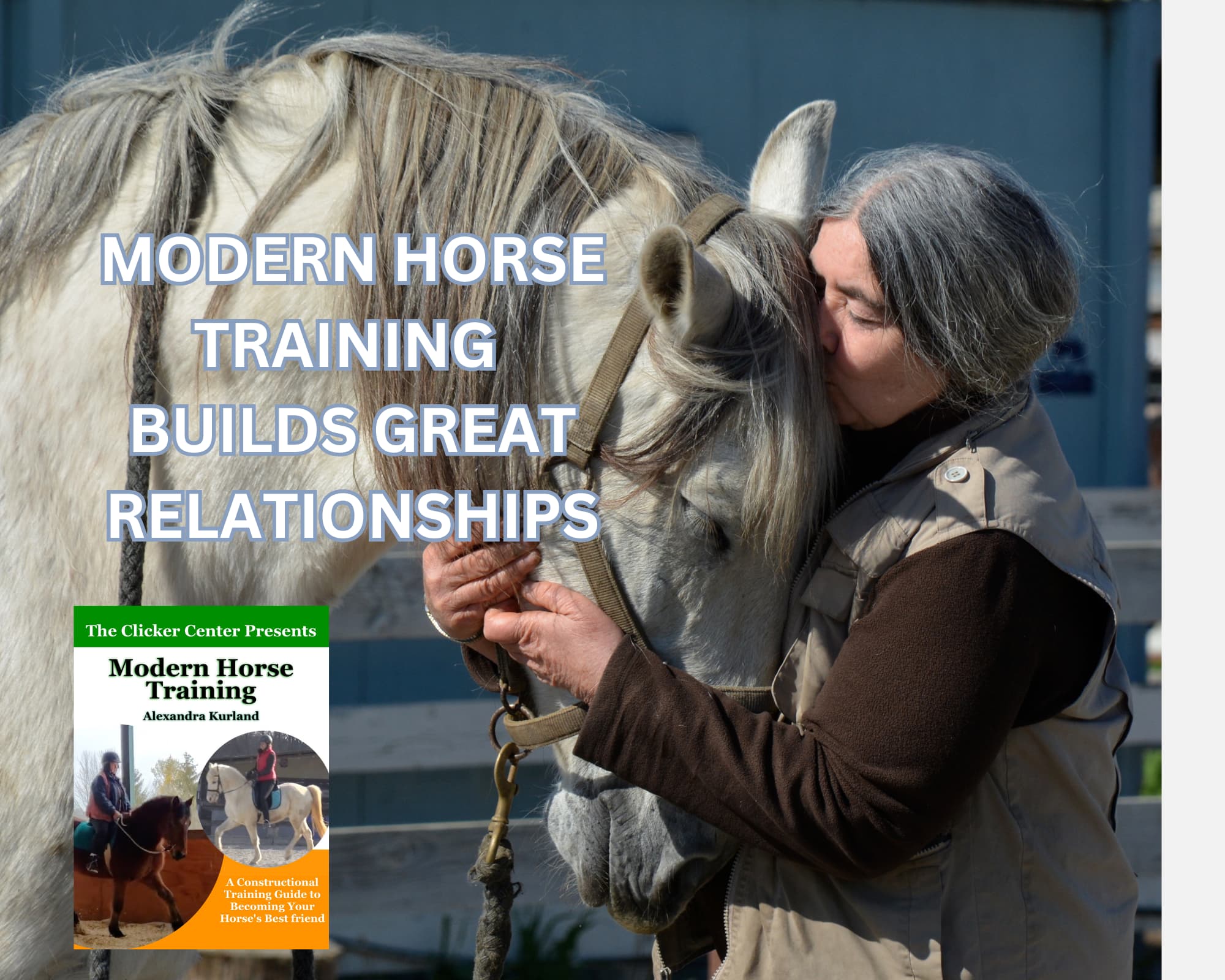
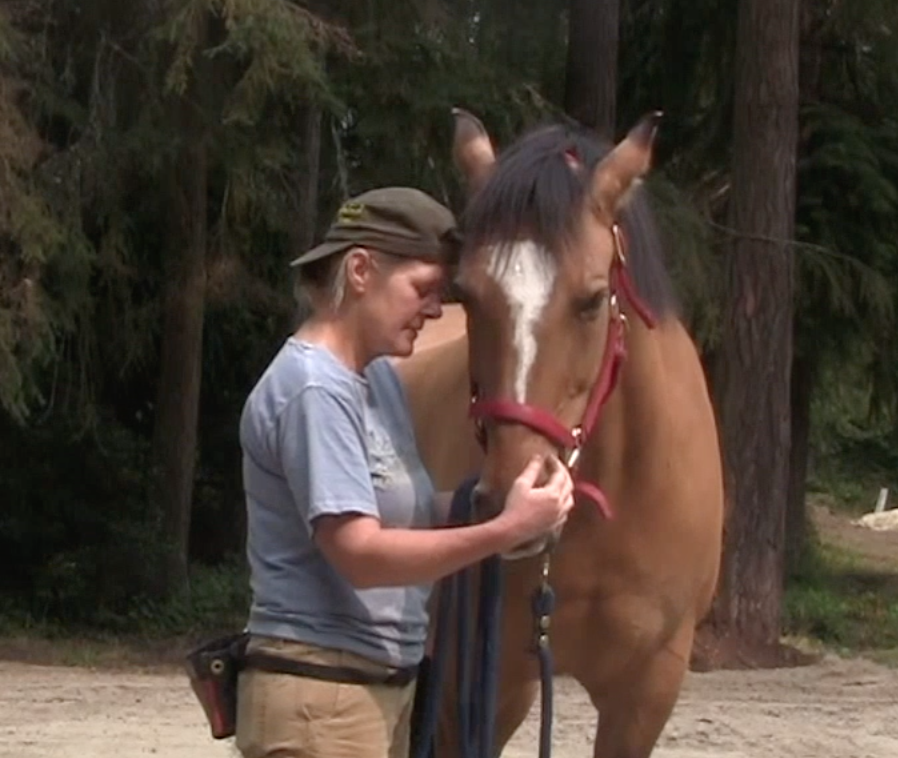
I love this photo because this horse began by actively warning me to stay out of his space. His body was covered with “No Trespassing” signs. Teaching him to give hugs changed all that.

The hug begins as simple body part targeting. The horse learns to bring his nose to your hand. With your palm over his nostril you can feel the horse breathing in, breathing out. Click as he exhales and pretty soon you are clicking as the horse relaxes and melts into your waiting hand.

Adding in your second hand gives him two target points to orient around. This can become an exercise in body awareness and balance. Or you can turn it into a social hug.

It’s hard to tell who enjoys the hug more – horse or human. I suspect the best answer is we both do.

This is very much a case of we both enjoy a good bear hug.


Modern Horse Training is wonderfully sneaky. Simple behaviors such as basic targeting transform into so much more.

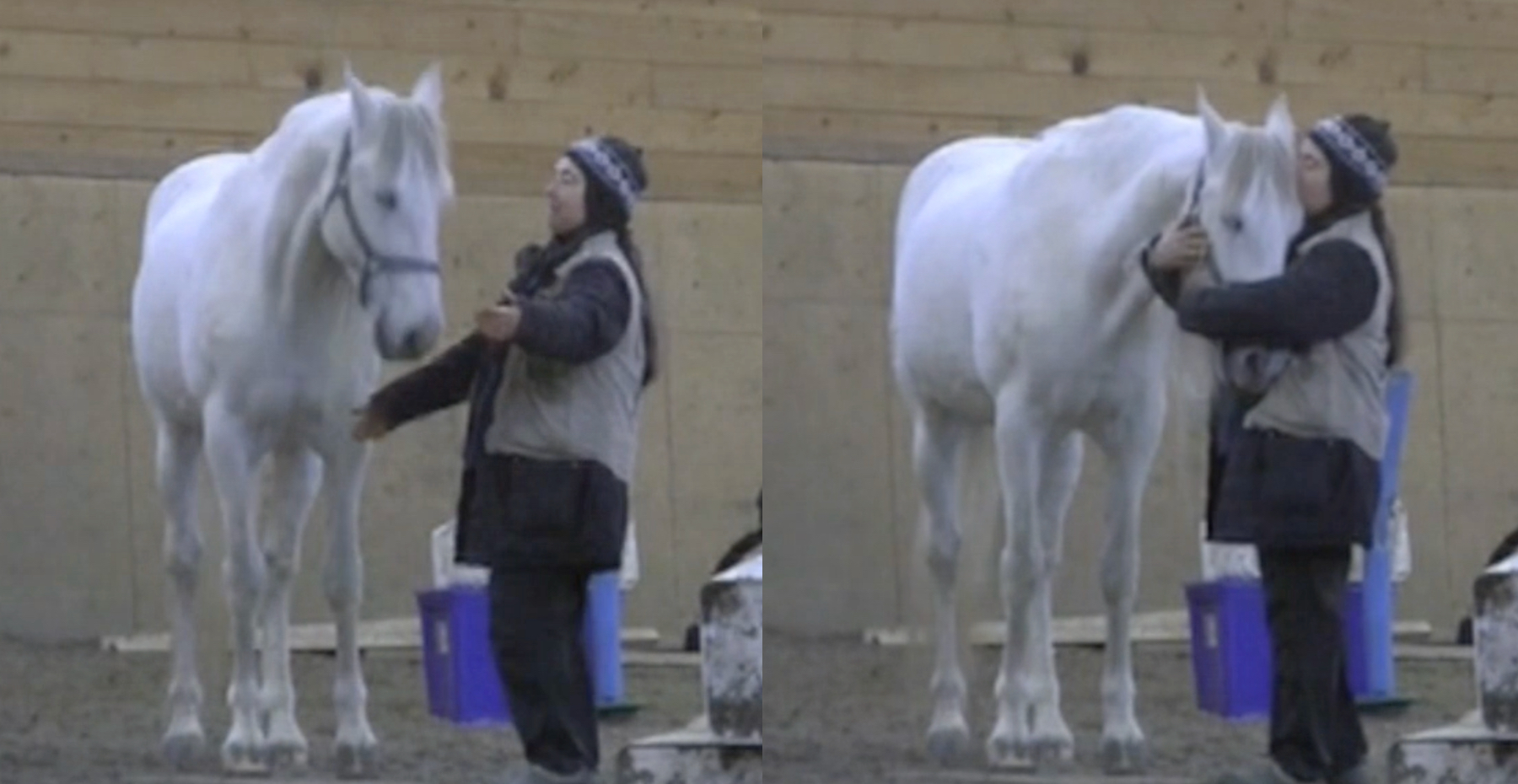
This image shows the beginning steps of teaching the Awareness Hug.

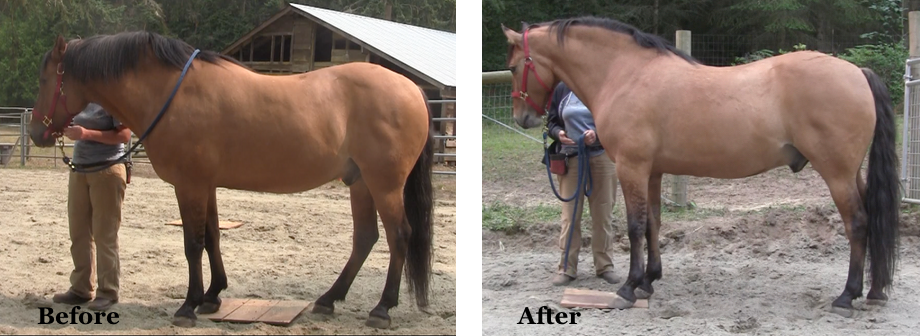
This is one of my favorite before and after comparisons. The changes in the way this horse is holding himself occurred after three sessions held over a day and a half. The Awareness Hug very much contributed to the changes you’re seeing.

“Before” he’s in a higgledy-piggledy stance with his balance pitching forward. He looks stuck. Under saddle you could imagine it might be a chore to get him to go forward with enthusiasm.

“After” he’s lifting up. He’s standing much more over the support columns of his legs. He looks so much more athletic, as though it would be easy to go forward.

The Awareness Hug is taught in detail through my on-line clinics. I’m tempted to say it is part of Clinic #6: Connecting the Dots since I have a unit that is specifically on The Hug in that clinic. But everything is connected to everything else. To truly understand the details that helped change this horse’s balance you need to connect the dots through all the clinics.

To learn more about my on-line clinics visit my web site: theclickercenter.com

Modern Horse Training Takes Your Horse Into His Senior Years

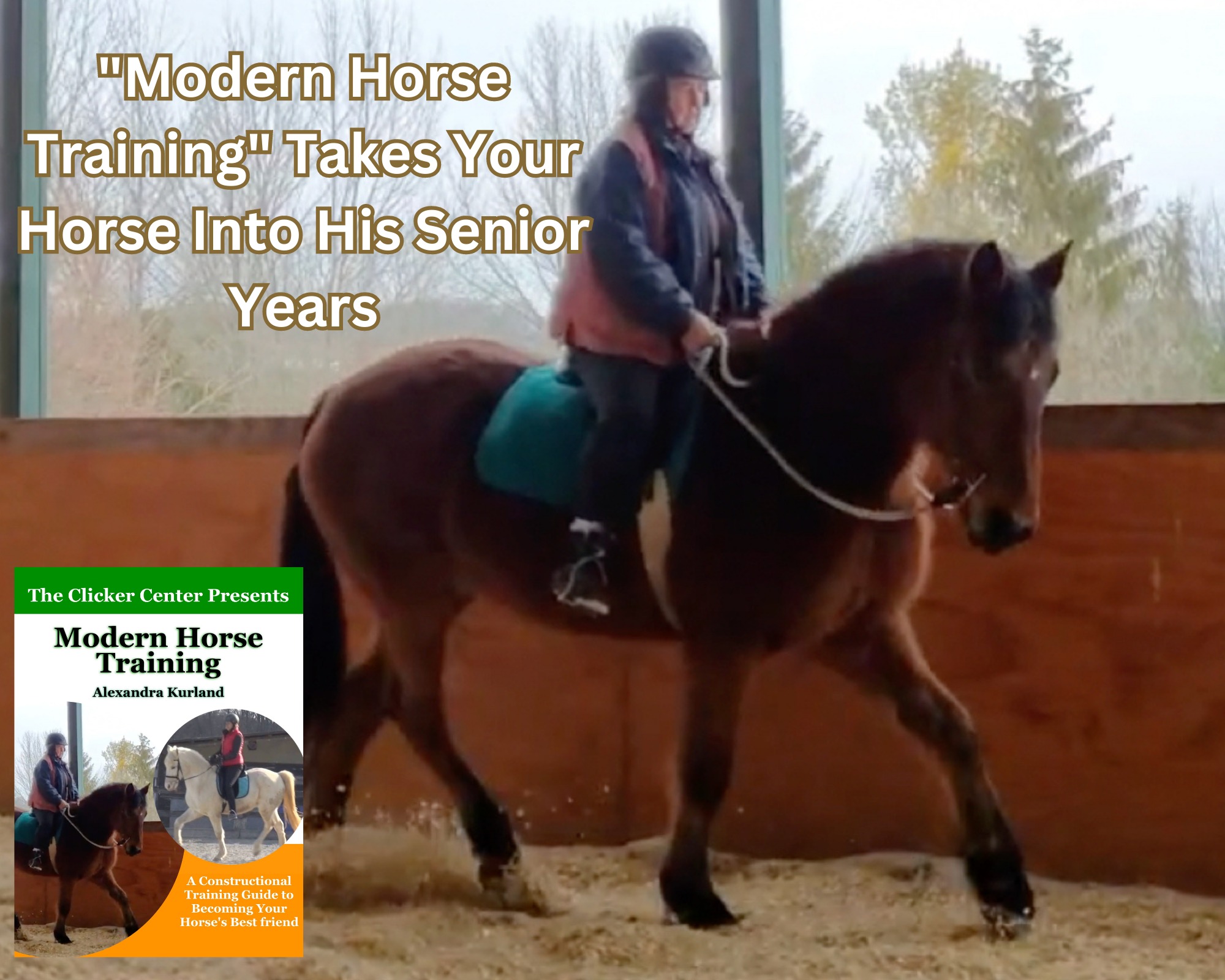
I chose this photo for the cover of my new book for many reasons. First, it’s simply a beautiful image. I love the overall balance, the roundness of Robin’s topline, the softness of the reins, the energy and suspension, the settled attention. But I also chose this photo because of the statement it makes. Robin was twenty-seven when this photo was taken. He’s still in work. He’s still moving beautifully.

Balance is the central pillar around which I build all my training. Balance matters to me because I love my horses. I want them to be in my life for as long as possible, and I want them to have a good quality of life. Physical balance and emotional well being are woven together. Balance has always been a key ingredient, beginning with the very first lessons I taught Robin when he came to me as a yearling. Clicker training has been with us every step of the way. Modern Horse Training has been there throughout his whole life.

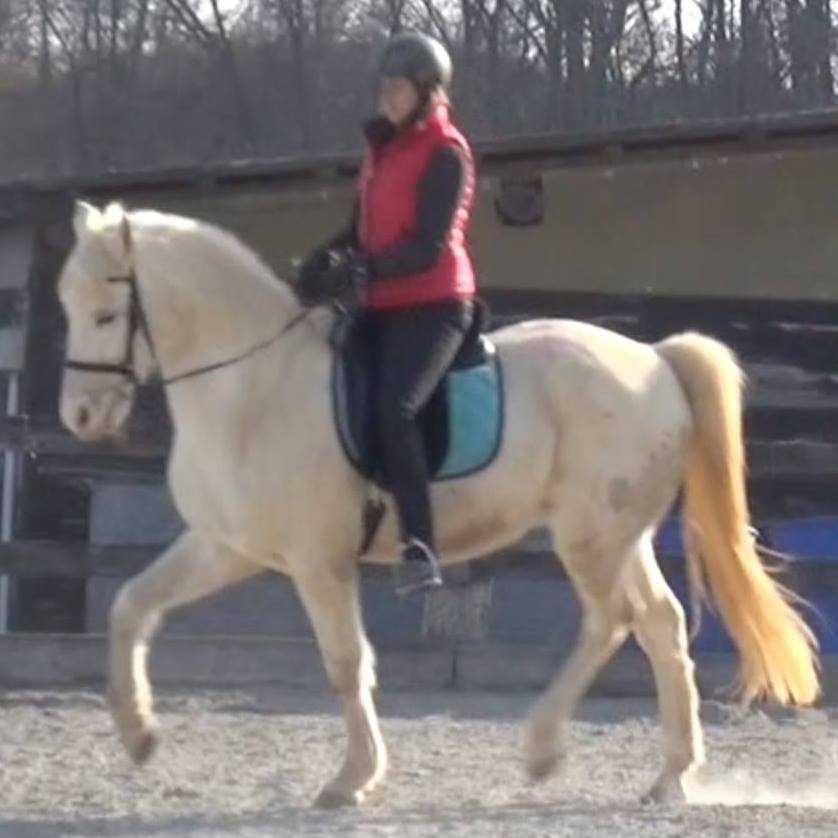
The other horse featured on the cover is Michaela Hempen’s Asfaloth. He’s also now in his twenties and still loving to play.

Asfaloth shows us how important balance is.

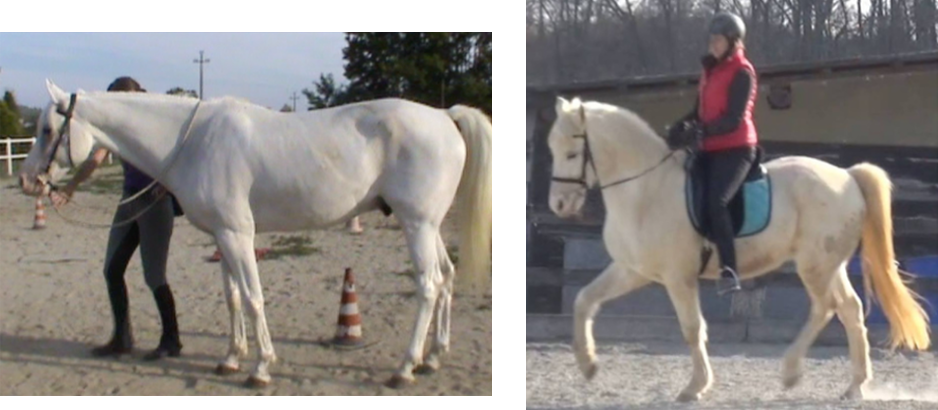
When you look at these two photos it is hard to believe it’s the same horse. The photo at the left shows Asfaloth in his early teens when Michaela was just beginning to work with him.

A lot of horses stand like this so at first all you may see is a grey Arab. No big deal. But compare him to the photo at the right and you’ll begin to some of the early balance issues. Look at his front legs. They’re angled back. If you were building a bridge, you wouldn’t want the support columns to be angled back like this. He’s long like a sausage. He’s falling forward onto his forehand. In this balance, he wouldn’t be able to produce the beautiful suspension you see in the second image.

A bridge or a house which is built on such crooked underpinnings isn’t going to last as long as one that is built well. Our horses show us that good balance carries them forward into their senior years.

Michaela’s excellent training is featured throughout my on-line clinics.

You can read about her work at her website: https://clickertrainingpferde.com/

Modern Horse Training Puts Safety First

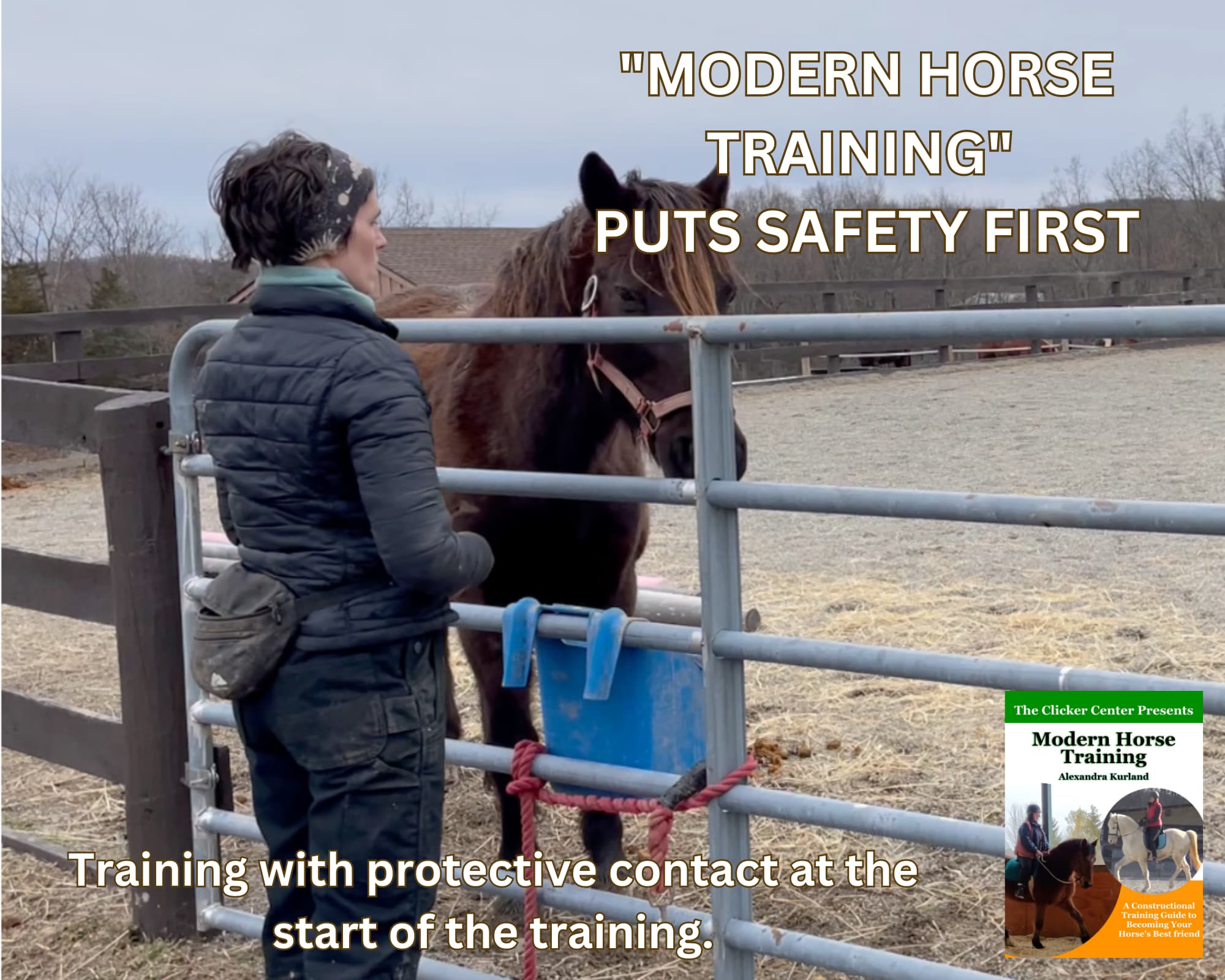
This is one of the photos I included in the book. This is Taylor Culbert working with her horse Theo. She adopted Theo from a horse rescue. In this lesson she’s using protective contact. That means there’s a barrier between them. Theo always has the option of leaving.

I love this image because it illustrates a great set up for protective contact. Theo could easily walk away from the gate, but he’s choosing to stay. He’s not crowding into the gate, reaching through the bars or stretching over the top rail. Instead he is standing politely in his own space presenting what Taylor is looking for – an ears forward, relaxed “happy face”.

When people introduce their horses to clicker training, I always recommend that they begin with protective contact. Protective contact means clicker training begins by placing safety first. If a horse becomes pushy because you have treats in your pockets, you can just step back out of the way. You don’t have to correct the unwanted behavior. You can stay focused on what you want your horse TO DO.

I recommend beginning with protective contact even when you know your horse well and you have no any safety concerns.

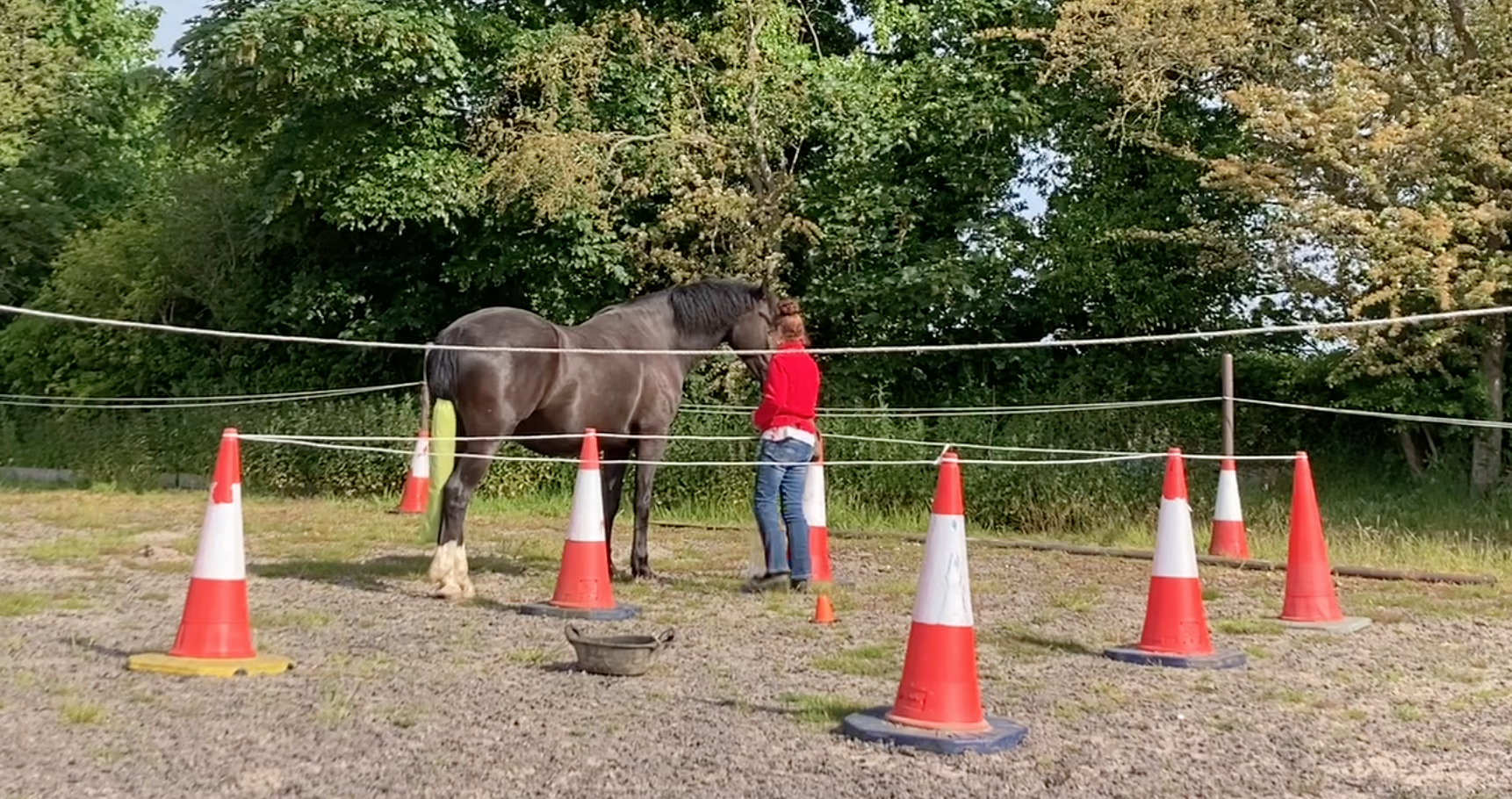
This “donut” structure is a great set up. The handler stays in the center of the “donut” with the horse free to leave on the outside. Choice is an important part of Modern Horse Training.

Part of good training is learning to use the environment well so you can set your horse up for success. Clicker training is going to introduce many new concepts, including one that may feel very foreign to both horses and handlers. Horses have choice. It is okay for horses to say “no”.

“No” is just information. It isn’t a rebellion or a sign of failure. It is just information. When your horse says “no” to something you have asked him to do, it means the lesson has become too hard or too confusing. He doesn’t understand what you want him to do. Getting to a “yes” answer means you need to make some adjustments. That may mean going back a few steps in your training to ask for a simpler step, or teaching a missing component skill, or changing the environment so it is less distracting. These changes will get you to a “yes, I understand that, I can do that” answer.

Horses that have been trained with commands have learned that they have few choices. “Well behaved” has come to mean they do what they are told. Safe, reliable horses are very much the goal of Modern Horse Training, but we want more than this. We want horses who participate because they want to, not because they have to.

When you begin with protective contact, you are saying to your horse: “This training is different. You have choice. I will listen to you, and I will adjust the training to meet your learning needs.”

If your horse walks away, the barrier means you can’t force him back into the game. He truly does have the choice just to walk away.

It is our job to make the lessons clear enough, interesting enough, reinforcing enough that our horses want to stay. Modern Horse Training means our horses truly do have a voice that is listened to.

Find me on Instagram at @alexandra.kurland.5

You can buy the new book, “Modern Horse Training”, through my web site: theclickercenter.com and from Amazon and other booksellers.

Modern Horse Training Is . . . (continued)

I’m practicing the skill of writing short posts. Here’s the second post I put up on Instagram. You can find me there at: @alexandra.kurland.5

But note – I couldn’t resist adding a bit more to the original instagram posts.

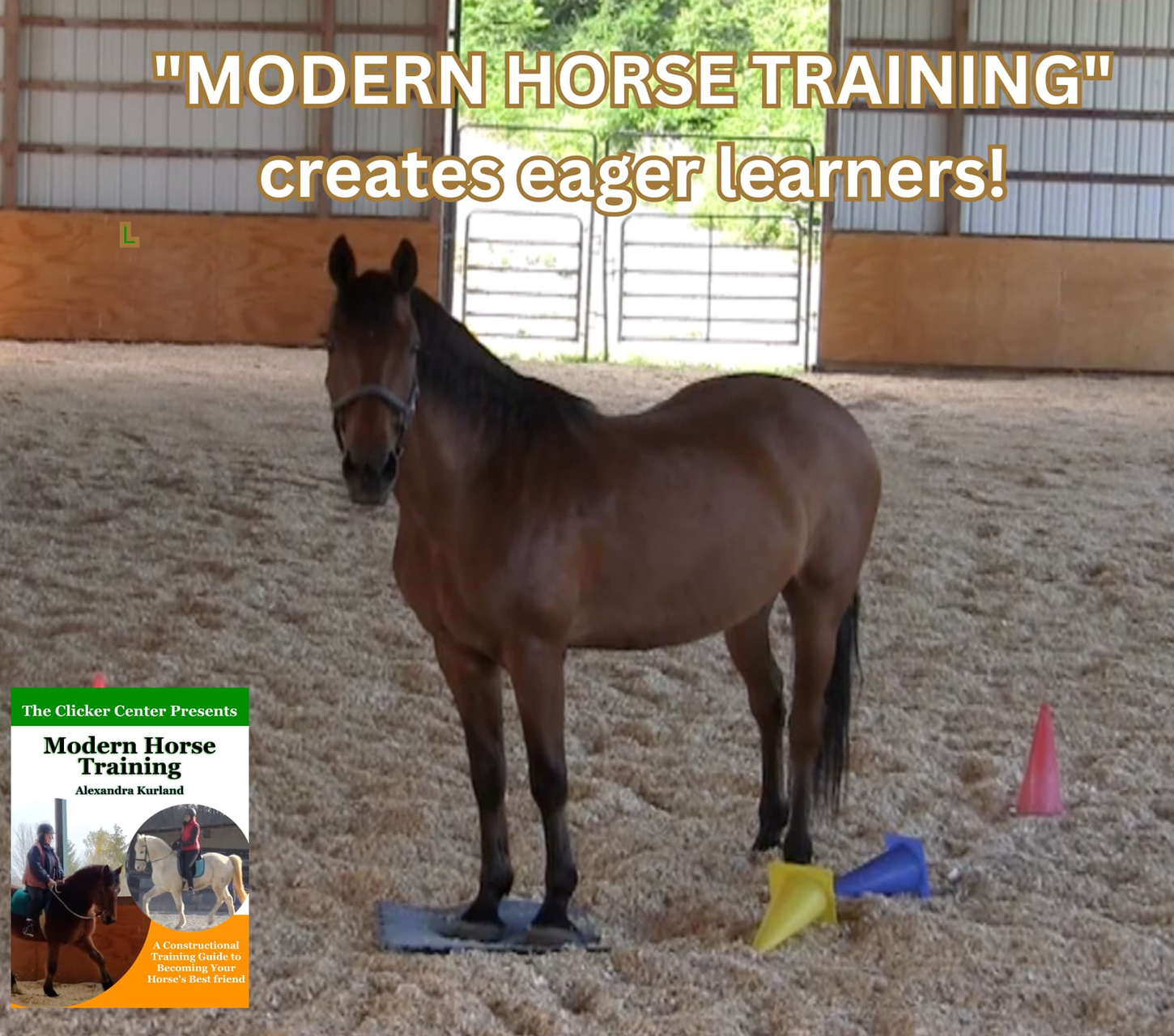
I love this photo. Robin is waiting for the lesson to begin.

Here’s the story behind this photo. I was getting set up to video the runway lesson. That’s a lesson that I use to introduce horses to standing on mats. Instructions for the lesson are included in the new book, “Modern Horse Training”.

Obviously, mats don’t worry Robin. He loves his mats. He had been standing off to the side of the arena watching me set out the cones and the mat.

The camera was up on the deck that overlooks the arena. Once the cones were in place, I left the arena to turn the camera on. I went out of sight into the barn and then up a flight of stairs to the loft. Robin let me know that he was eager for the session to begin by going over to stand on the mat.

His behavior tells me that he not only understands the runway lesson, he enjoys it. He wanted the lesson to begin!

I love this about our clicker-trained horses. They let us know in so many ways that this is training they truly enjoy.

How do your horses tell you they enjoy their training time?

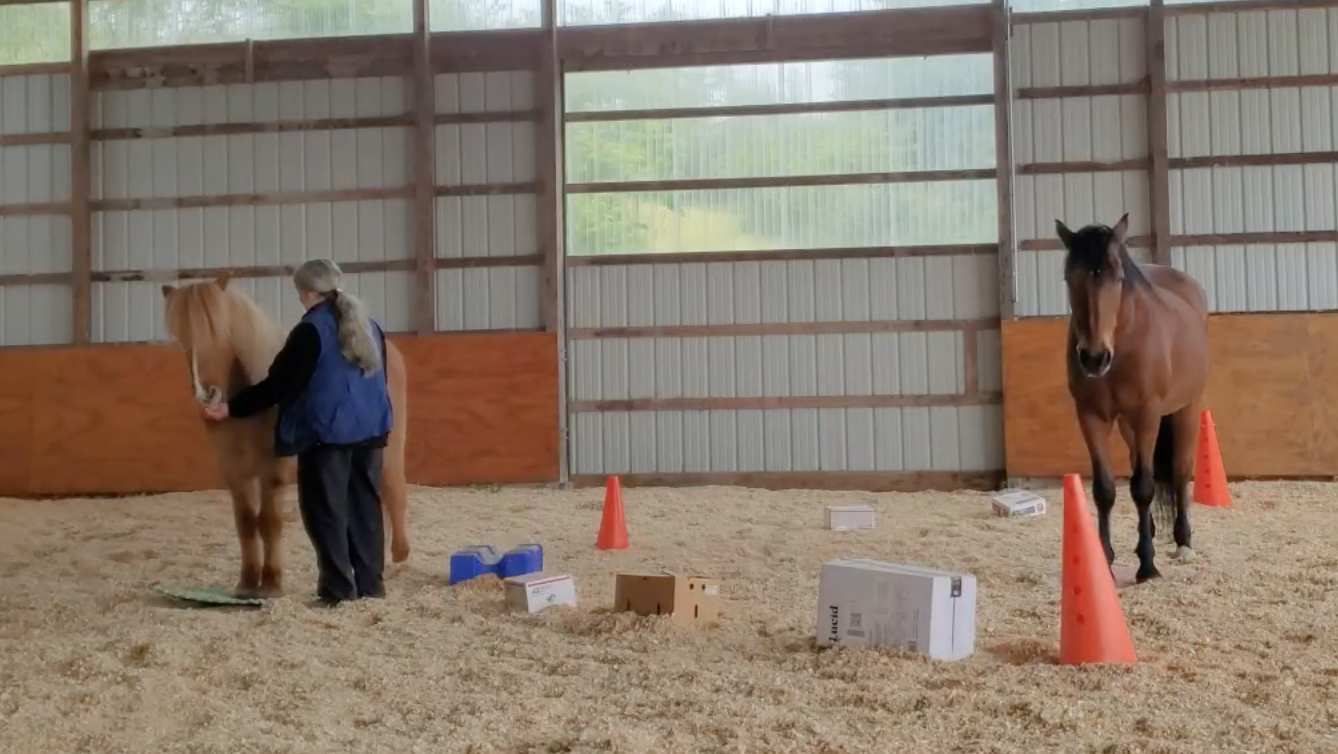
Robin and Fengur join me in the morning while I clean up the arena. When the chores are done, we have a game of “musical chairs” around a circle of cones and mats. Robin is waiting patiently on a center mat while Fengur has a turn. (Note: I try to reduce my use of plastic, so when I needed more cones, instead of buying new ones, I reused cardboard shipping boxes. They work great in my cone circle.)

Modern Horse Training Is . . .

I’ve been dipping my toe into Instagram. I’m just learning my way there. I like writing books. Writing short posts to meet the Instagram format is not my normal style, but I’m appreciating that it’s a useful skill to develop. I’ve been enjoying picking out some of my favorite photos to share to define what I mean by Modern Horse Training. They make good posts to add to my blog which is what I am doing here.

Here is the way I began on instagram. This post was published on May 26, 2023

My new book “Modern Horse Training” was published on April 26, 2023. Today I am celebrating the one month anniversary by exploring Instagram. People who know me are aware that I am a very reluctant user of social media.

Instagram is very much unknown territory for me, so bear with me as I figure out how it works. I am very much like many of you who are new to clicker training. I’m asking the same questions. What is this? How does it work? How do I begin?

Regular users of social media would have been chuckling if they had seen my computer usage over the last couple of days. I was like a nervous horse edging up to a puddle, jumping back, nosing forward again. Should I or shouldn’t I put a toe in?

I have bravely decided to test the water. Just like that nervous horse I could easily jump back out again, but I have a lot that I want to share with you about Modern Horse Training – not just the book but what that phrase has come to mean to me.

I’m motivated to take the first step in. You can reinforce this behavior in a number of ways. You can, of course buy my book. That’s very reinforcing! It is available through my web site, theclickercenter.com, Amazon and other book sellers. You can leave a five star review on Amazon. People have been writing some extraordinary reviews which I deeply appreciate. They are great reading! And they certainly help to spread the word about clicker training.

You can share the book with your friends. And you can share your own images of what Modern Horse Training means to you. With your help, I’m going to be learning how that’s done on Instagram. You can laugh as I stumble my way around hashtags. Just remember the answer is always obvious to the one who knows it.

Right now I have questions not answers which means I am exactly where someone is who is new to clicker training. I am imagining them opening my new book for the first time and beginning their journey into clicker training – just as I am beginning my exploration of Instagram. The difference is they get to play with their horses. Whatever anyone says about social media playing with horses has to be more fun!

You can find me on Instagram at alexandra.kurland.5

Modern Horse Training – One Month Anniversary

It’s been a month since “Modern Horse Training” was published. Yesterday I celebrated the one month anniversary by exploring Instagram. People who know me are aware that I am a very reluctant user of social media.

Instagram is unknown territory for me. I am very much like someone who is new to clicker training. I’m asking the same questions. What is this? How does it work? How do I begin?

Regular users of social media would have been chuckling if they had seen my computer usage over the last couple of days. I was like a nervous horse edging up to a puddle, jumping back, nosing forward again. Should I or shouldn’t I put a toe in?

I have bravely decided to test the water. Just like that nervous horse I could easily jump back out again, but I have a lot that I want to share with you about Modern Horse Training – not just the book but what that phrase has come to mean to me. I’m motivated to take the first step in.

So I have put up my first post on Instagram. If you are on Instagram, you can reinforce this behavior in a number of ways. You can, of course buy my book. That’s very reinforcing! It is available through my web site, theclickercenter.com and Amazon. You can leave a five star review on Amazon. People have been writing some extraordinary reviews which I deeply appreciate. They are great reading! And they certainly help to spread the word about clicker training.

You can share the book with your friends. And you can share your own images on Instagram of what Modern Horse Training means to you. With your help, I’m going to be learning how that’s done on Instagram. You can laugh as I stumble my way around hashtags. Just remember the answer is always obvious to the one who knows it. Right now I have questions not answers which means I am exactly where someone is who is new to clicker training. I am imagining someone opening my new book for the first time and beginning their journey into clicker training, just as I am beginning my exploration of instagram. The difference is they get to play with their horses. Whatever anyone says about social media playing with horses has to be more fun!


See you on Instagram! If I have the language right, you can follow me at #ModernHorseTrainin

Modern Horse Training – Morning News

Modern Horse Training – Morning News

I’m smiling this morning. People have been reading the new book and the reviews for new book are indeed coming in. Thank you to all of you who posted your comments. They are truly amazing!!!

So thank you to Amy, Tehachapji (I love the photo you included of your equine best friend),Sybil, Julie, Sabine, Denise, Eileen and CMC. You certainly got my day off to a great start! Thank you for your wonderful comments!!

I encourage everyone to visit the “Modern Horse Training” page on Amazon to read the reviews. (https://www.amazon.com/Modern-Horse-Training-Constructional-Becoming/product-reviews/173341682X/ref=cm_cr_dp_d_show_all_btm?ie=UTF8&reviewerType=all_reviews)

So now let’s have some fun. Help me add to this word chain by describing what Modern Horse Training is. I’ve posted this on The Click That Teaches facebook group. I’m looking forward to seeing what others share. I’ll get us started with some help from Robin and horses I have met in clinics. I’ll let Panda lead us off because that’s what she normally does.

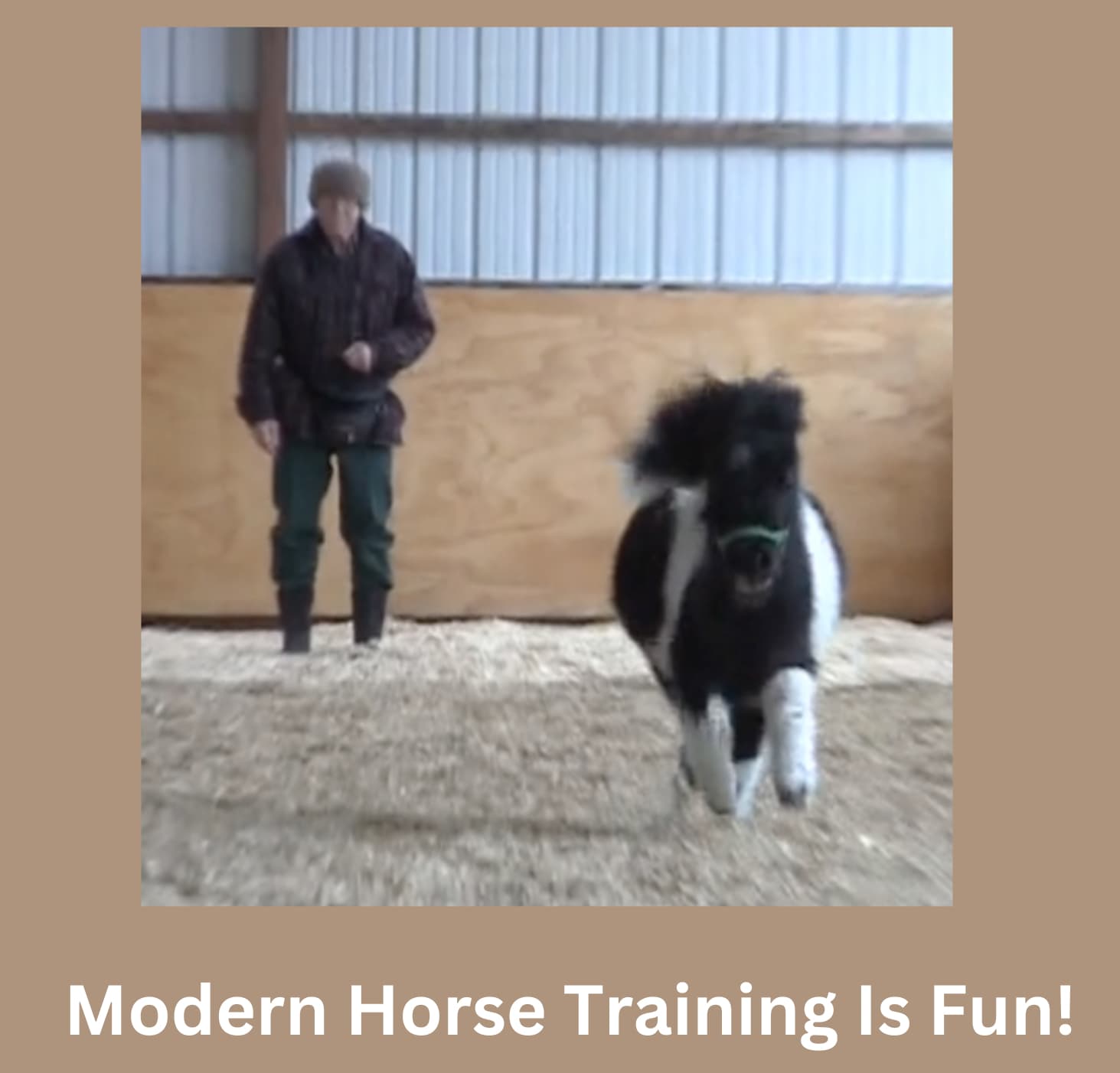
Modern Horse Training is Fun! Please use the comments section to add to the word chain and share on social media.